For Canadian Buyers
Partner Factory for Canadian Streetwear Brands
First off, the price quoted to a Toronto brand was slightly higher than what they had been expecting; however, it was not because of the price charged by our factory for production, but because they had calculated the cost of an order based on their assumption that Canada was able to enjoy near-zero tariff treatment like Australia for the same shipment. It is not. Canada has no free trade agreement with China, and so there are duties to be paid for almost all shipments from China to Canada, and duty rates tend to be relatively high among the markets we supply to. This will be discussed further below together with GST/HST, bilingual labeling, and what shipping to Canada from Dongguan is all about.
Our Canadian clients generally place orders without a sourcing agent, and this is why these questions get addressed directly to us. This makes things faster to sort out, but it would help to have an idea beforehand about what goes into calculating the landed cost in case you need a quote.
Duty, GST, and HST, in simple words
No China FTA — duty appliesSince there's no free trade agreement between Canada and China, the preferential rate cannot be applied here like it is in the case of other countries where buyers are active. Apparel will be subject to the Most Favoured Nation tariff rate according to the CBSA's Customs Tariff, and the Most Favoured Nation rate usually stands at around 16–18% for most HS code groups of garments. As usual, it is better to find out what particular tariff rate should be applied to a particular HS code rather than applying one single rate to the whole order just by guessing.
GST and HST are two different things, and they are applied in addition to duty. As it is explained by the CBSA's guide for the calculation of duties and taxes, the federal GST should be equal to 5% of the cost of the cargo upon arrival, including duty. Depending on the location of the company, the additional taxes may vary: the participating provinces pay HST instead of GST, while the other provinces have to pay both GST and provincial sales tax. Since the latter tax is province-specific, it's better to check with the accountant whether everything should be done in the same way as for a domestic shipper in Canada.
And one more thing about a first shipment: it is necessary to register the company in the CBSA's Assessment and Revenue Management (CARM) Client Portal in order to deal with duties and taxes related to importation independently.
Bilingual Labeling Requirements
Textile Labelling ActAccording to the labeling requirements enforced by the Competition Bureau, the fiber content information for a particular garment must be provided in English and French, regardless of what language you choose, unless the clothing is to be exclusively sold in areas where transactions occur only in one of the official languages, a condition rarely met by nationally distributed brands. The dealer identity (either your business name and address or CA number assigned by the Competition Bureau) may be shown in either language, while the fiber content has to be bilingual and precise. You can mention any fibers that constitute 5% or less of the total fiber content in your garment as "other fibers."
These requirements are integrated into the labeling specifications at the sampling stage, just like all others, and the difference for Canada is that the label will have two languages rather than one. The process doesn't take more production time or affect the sampling schedule in any way; it is established together with the washing instructions and attached on the line during the bulk run.
How your order gets to a Canadian port
Production → your warehouseThree stages, the same shape as every other region — what changes for Canada is mostly what happens at clearance, not what happens on the factory floor.
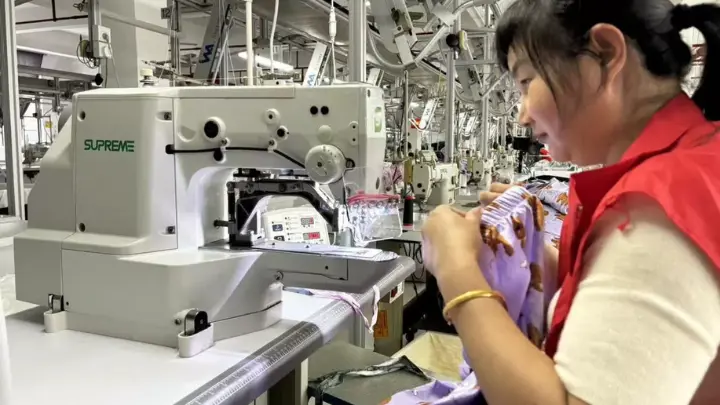
Production & bilingual labelling
Fibre content labels go on in English and French, matched to what was confirmed and approved at sampling.
25–35 business days
QC & export paperwork
100% inspection at AQL 2.5/4.0, plus the invoice and HS code documentation CBSA needs for the CARM declaration.
2–3 business days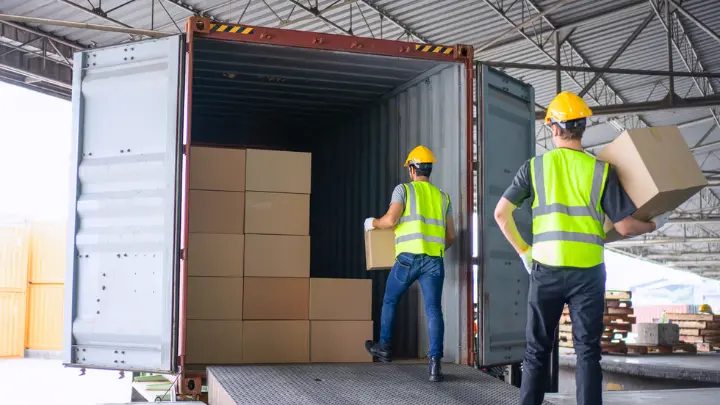
Sea freight & clearance
20–28 days to Vancouver, plus rail time if the order's headed further inland to Toronto or Montreal.
20–28 days transitCanada, at a glance
Everything above in one place, for anyone skimming back through this later while budgeting a first order.
| Item | What applies |
|---|---|
| Customs duty | ~16–18% MFN rate — no China FTA to reduce it |
| GST / HST | 5% federal GST, plus HST or provincial sales tax depending on province |
| Labelling | Bilingual (English/French) fibre content declaration, mandatory |
| Importer registration | CARM Client Portal registration required for commercial importers |
| Shipping | 20–28 days sea freight to Vancouver; 5–8 days air freight, door to door |
| Terms available | FOB, EXW or DDP through freight partners |
Selecting between FOB, EXW, and DDP terms
Which term fitsSince there is quite a lot going on with a Canadian order (duty, GST/HST, CARM registration, bilingual documents), this is usually when a buyer decides not to keep things too complicated and to outsource a bit more. FOB (delivery of the cargo at the Chinese port, all shipping and clearing organized by the buyer) works great for buyers who already have a customs broker in CARM and shipping experience with other orders. The EXW option gives maximum control, but it puts all the responsibility onto the buyer and rarely makes sense for the first Canadian order just because of the CARM registration requirement. DDP is a more expensive but easier option for the first-time buyer since he would already pay all the duties and GST/HST upfront; however, for a first-time buyer who does not have CARM registration and experience with a customs broker, it is usually better to go with DDP first and to switch to FOB when he becomes ready for this.
Price & Minimum Order Quantity
It does not change the cost you pay for the factory — it changes what happens to your order after it leaves China. The Minimum Order Quantity is 50 units per style, per colorway — just as it is for all the other regions we ship to. The terms of payment will remain 30% deposit up front, with the 70% balance due against pre-shipment inspection. Details of unit price and its correlation with volume are available on MOQ & Pricing, while generic timelines and freight options available for all four regions we serve are outlined on Shipping &Lead Time . None of the pages is Canada-specific, but the duty, GST/HST, and labeling requirements described above are what really makes your order different from any other order — include those in your landed cost calculations before receiving your first invoice, not afterward.
Reorders are less paperwork intensive after initial set-up. Once CARM registration is done, bilingual label specification is determined, and a sample is approved by the customer, all feasibility and sampling processes are completely avoided, and the buyer only needs to confirm quantity and colorway; deposit and production are started. The duty and taxes treatment will not change whether it is the first order for the product or the fifth; what changes is the amount of paperwork already done.
Frequently asked questions
How much duty do we pay importing garments from China to Canada?
Do we pay GST, HST, or both?
Do labels need to be in both English and French?
What's the typical shipping route and transit time from Dongguan to Canada?
Do we need to register for CARM before importing?
Can you handle DDP shipping to a Canadian address directly?
Ready when you are
Sourcing from Canada? Start with a quote.
Feasibility check and cost estimate within 2 business days. No tech pack yet? Send a reference — we'll help you build one.
Reply within 24h · GMT+8 · English OK · NDAs signed on request