OEM vs ODM Manufacturing: Which Model Fits Your Streetwear Brand?
OEM clothing manufacturing starts with a brand-supplied design; ODM starts with a manufacturer-supplied or manufacturer-developed design. Compare development costs, timing, minimum orders and design rights below, then see how FORGEMFG supports each route for streetwear brands.
Prepared by the FORGEMFG team. This guide separates general manufacturing terms from our service approach. Confirm quantities, development fees, delivery schedules and design rights in your written quotation and manufacturing agreement.
OEM vs ODM in one paragraph
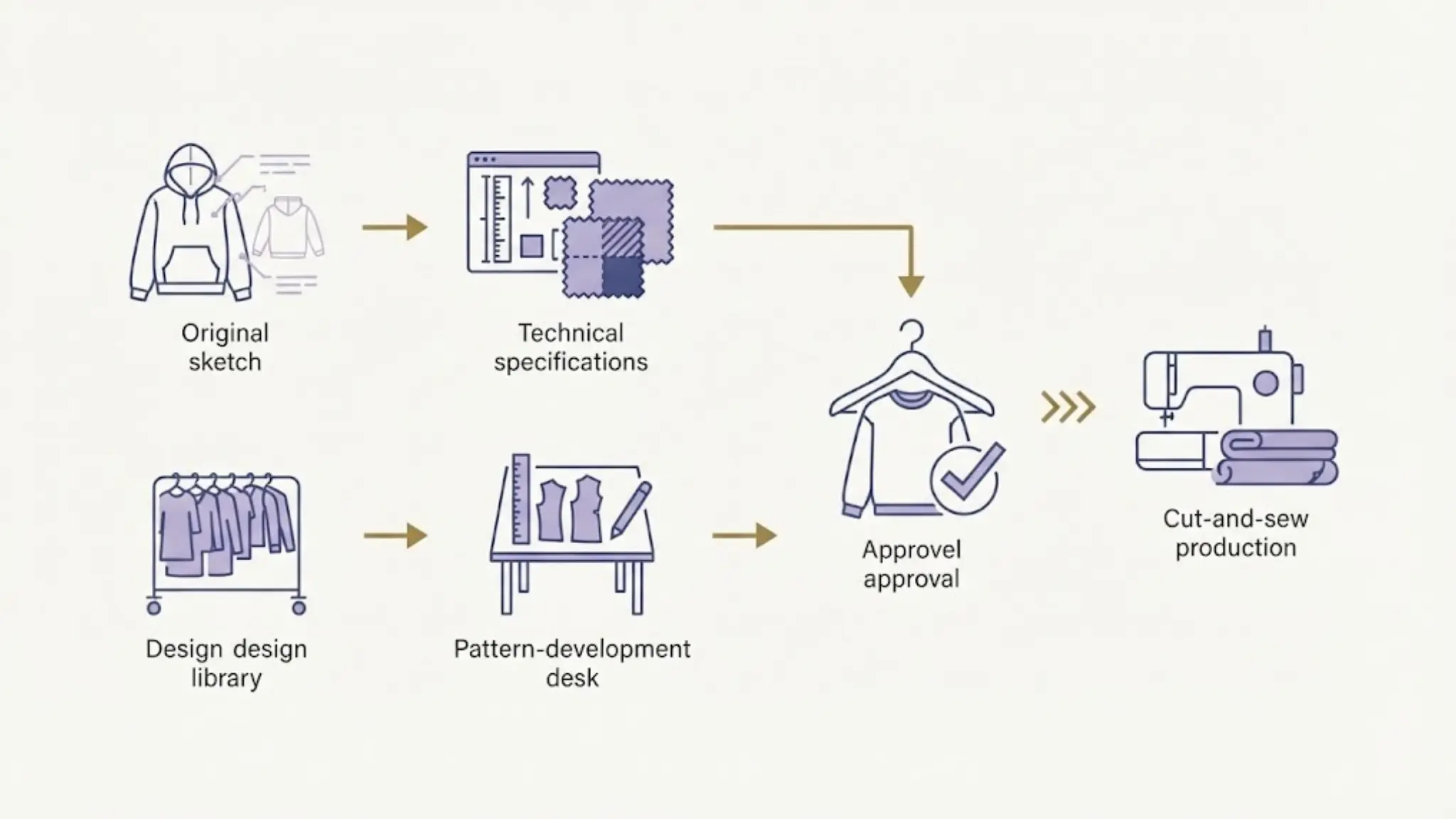
What OEM means when you order from FORGEMFG
Under our OEM service, you supply the garment design and its specifications. These may describe a completely new style, a reorder or a style moving from another supplier. A production-ready tech pack should cover measurements, size grading, fabric, construction, trims, decoration, labels and agreed tolerances. Any material substitution needs your approval.
Illustrative example: your brand designs an oversized hoodie and supplies its measurement chart, fabric weight, pocket construction and artwork placement. We review feasibility and develop the production sample against that specification. OEM does not require the garment to have been manufactured before.
A clear specification supports a more reliable quotation, but gaps can still require development work. Our tech pack design assistance can help document missing details. Needing help with a technical file does not automatically make a buyer-designed garment an ODM project.
What ODM means when you order from FORGEMFG
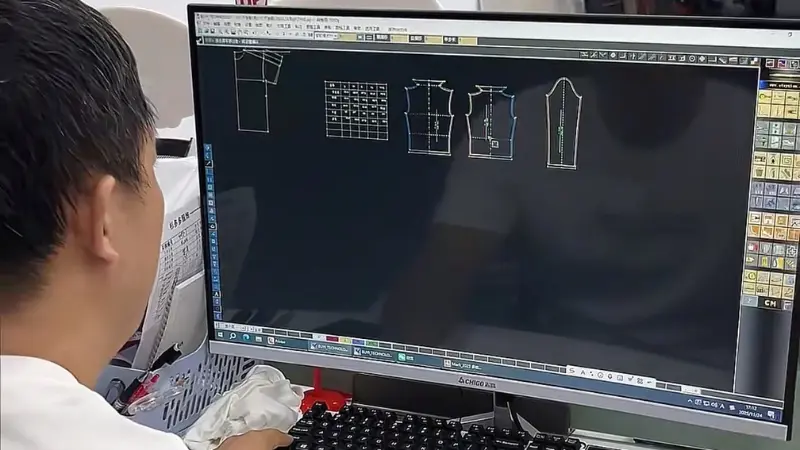
ODM means the manufacturer supplies or develops the product design. Across the industry, this can mean adapting an existing design or developing a new one with the buyer. At FORGEMFG, our development service helps turn an approved concept or reference into a pattern and tech pack, with fabric, wash and trim recommendations.
Illustrative example: you have a target fit and an original concept for a heavyweight washed hoodie, but no production specification. Our team helps define its measurements, construction and finish for sampling. References communicate direction; use original or authorized artwork and agree the approved design rather than assuming an exact copy is available.
Before paid development begins, agree who owns buyer-supplied artwork, existing factory fit blocks and newly developed patterns. Specify which technical files you receive, their formats, permitted modifications, whether another factory may use them, and any transfer or exclusivity fees. Possession of a tech pack is not the same as owning every underlying right.
Record exclusivity, permitted reuse, sample revisions and file delivery in the manufacturing agreement. The WIPO overview of industrial design rights explains the general subject; your project agreement must state the actual terms. An approved sample does not automatically transfer ownership.
OEM vs ODM at a glance
Compare responsibilities, costs and rights before ordering| Factor | OEM | ODM |
|---|---|---|
| Design starting point | A brand-supplied design for a new style or repeat order | A manufacturer-supplied design or factory-led development |
| Technical specification | Buyer supplies the tech pack; agreed support can fill gaps | Factory develops the specification with buyer input |
| Customization | Defined by your design, material availability and production feasibility | Defined by the base design or development brief and agreed scope |
| Development costs | May include missing specifications, patterns, grading and sample revisions | May include design adaptation, new patterns, grading and sample revisions |
| Time to first sample | Depends on specification readiness and material availability | Also depends on design decisions and development needed before sampling |
| Ownership & exclusivity | Document rights to buyer inputs and any factory-developed assets | Agree rights to existing designs and new work before paid development |
| Files & supplier transfer | Confirm file delivery and permission to use all required assets elsewhere | Confirm file delivery, licenses, transfer conditions and any fees |
| Repeat orders | Use the approved specification; confirm material or process changes | May need less development, but existing rights and licenses still apply |
| FORGEMFG minimum order | 50 pieces per style, per colorway; confirm project requirements in the quote | Same stated starting minimum; confirm size mix and material requirements |
| Quality requirements | Agree tolerances, defect categories and the inspection plan | Agree the same items against the approved specification |
Which model fits your brand?
Start with your design, development needs and launch planChoose by the design responsibility you need the factory to take on. A brand-owned design can use OEM even when technical documentation needs work. ODM fits a project requiring manufacturer-led design or adaptation. In either case, agree costs, deliverables and rights before commissioning development.
Choose OEM if
- You supply the garment design and want production to an agreed specification
- You are developing an original style or repeating an approved one
- You can approve measurements, materials and construction details
- You want any technical support and related fees defined in advance
Choose ODM if
- You want factory-led design development or adaptation
- You need support turning an approved brief into patterns and specifications
- You want material and finishing options evaluated during sampling
- You will agree design rights, exclusivity and deliverables before development
How the two processes actually differ, step by step
Agree the specification before bulk production-
1
Send what you have
Send your design or reference, garment type, quantities by style and colorway, size range, destination and target date. We aim to provide an initial feasibility response within 2 business days; a confirmed quote may need more detail.
-
2
Spec gets confirmed
Agree the design brief, development fees, rights and deliverables. For OEM, we review your specification. For ODM, we define the development scope before drafting patterns and the tech pack.
-
3
Sample and refine
Our stated sampling estimate is 7–15 business days, subject to project confirmation. Your quote should specify the start date and whether development, revisions and shipping are included. Approve the sample before bulk cutting.
-
4
Bulk production & QC
The stated starting MOQ is 50 pieces per style, per colorway. Confirm size mix, material requirements, bulk lead time and the inspection plan in writing. Bulk production and shipping are separate from the sample estimate.
Compare development and sampling fees, bulk unit prices, packaging and delivery costs on the same specification and quantity. See MOQ & pricing for the pricing discussion.
Quality control and compliance apply either way
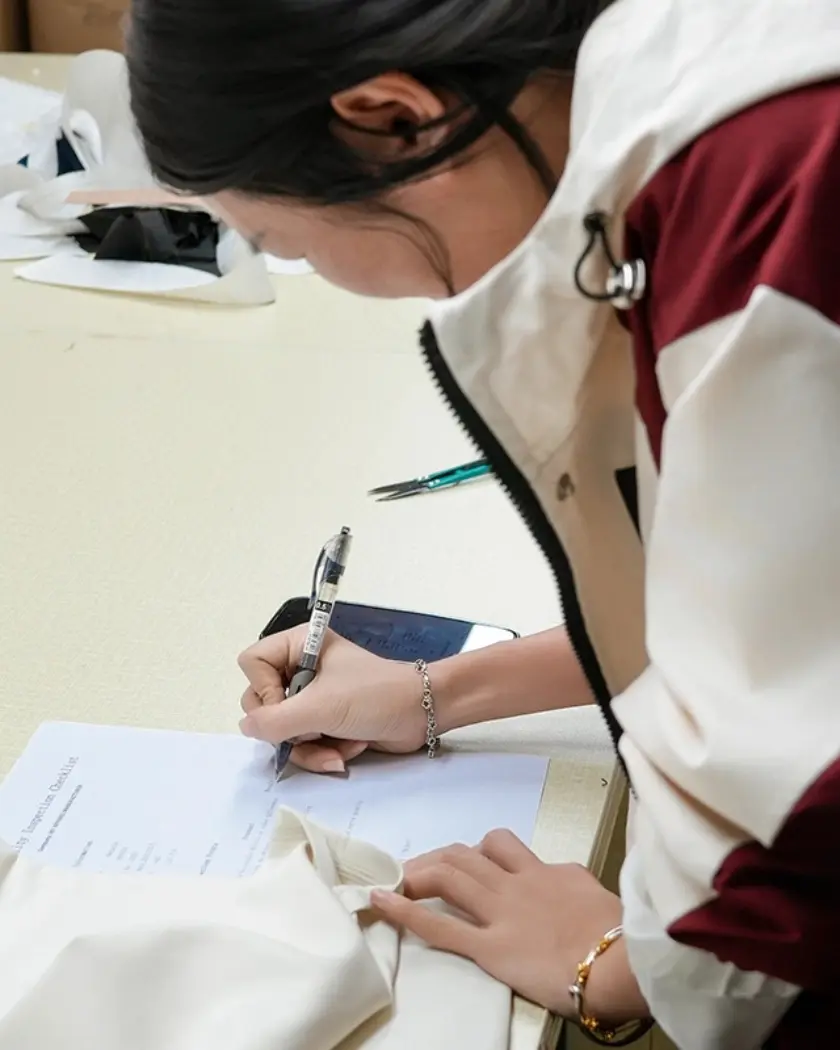
OEM and ODM both need an approved specification and an agreed inspection plan. Define measurement tolerances, appearance checks, defect categories and shipment acceptance criteria. AQL sampling checks selected units from a lot; it is different from checking every garment. If both are agreed, identify which checks apply to every unit and which use sampling. See ASQ's explanation of acceptance sampling.
Certification scope also matters: ISO 9001 concerns a quality management system; amfori BSCI concerns social performance auditing; OEKO-TEX STANDARD 100 covers certified textiles tested for harmful substances. Check the facility or product scope and current validity for your order. Most U.S. textile apparel needs fiber content, country of origin and the identity of the manufacturer or another responsible business; covered clothing also needs care instructions. Consult the FTC's textile labeling guide and care labeling guide. Product and destination requirements must be checked separately.
Frequently asked questions
Is OEM or ODM cheaper?
Neither model is always cheaper. An existing manufacturer design may reduce development work, while a new custom design may need additional patterns and sample rounds. Compare development fees, sample charges, bulk unit prices and delivery costs for the same specification and quantity. Ask whether sample charges are credited and which revisions are included.
Can I start on ODM and switch to OEM later?
Repeat orders can use an approved specification with less development, but an ODM reorder does not automatically become OEM or transfer design rights. A change in arrangement requires agreement on the relevant files, licenses and production rights. Reconfirm any fabric, fit or finishing changes before repeating an order.
Do I need a tech pack to start an OEM order?
You need enough information to define the intended garment. A production-ready tech pack is ideal; a detailed specification may be a starting point. Our tech pack design assistance can help fill gaps. Agree measurements, materials, construction, grading and tolerances before approving bulk production.
Who owns the pattern if FORGEMFG develops it under ODM?
Ownership depends on the agreement and the rights to the underlying material. Before paid development, distinguish your artwork, pre-existing factory patterns and newly commissioned work. Specify file delivery, permitted reuse, exclusivity and the right to take production elsewhere. Paying for a sample alone does not establish all of those rights.
Does the minimum order quantity change between OEM and ODM?
FORGEMFG's stated starting minimum is 50 pieces per style, per colorway for either route. Confirm the applicable minimum, size mix and any material or finishing requirements in the quote. For example, one style in two colorways starts at 100 pieces if both use the stated 50-piece minimum. See MOQ & pricing.
Can one order mix both — some styles OEM, others ODM?
Yes. You can submit buyer-designed styles alongside styles needing factory-led development. Identify each style's brief, development fees, rights, quantity and sample approval separately, then agree whether shipment is combined or split.
Is private label the same as ODM?
No. Private label describes products sold under your brand; it does not, by itself, identify who designed them. White label usually describes an existing product offered to multiple brands with limited changes. Supplier terminology varies, so confirm design responsibility, customization and exclusivity instead of relying on a label.
Which is faster: OEM or ODM?
Neither is always faster. A complete OEM specification or an available ODM design can reduce development time. New design work, material sourcing and sample revisions can extend either route. Compare confirmed development, sampling, bulk production and shipping schedules separately.
Not sure which one you need? Send what you have.
Initial response target: 2 business daysSend your tech pack, specification or design reference, plus garment type, quantities by style and colorway, size range, destination and target delivery date. Tell us whether you need development support or exclusive rights. Our merchandiser can review the brief and identify the information needed for a quotation.
Further reading: streetwear manufacturing sourcing guide