Printing & Embellishment — Embroidery
Custom Embroidery Manufacturing for Streetwear Brands
Custom embroidery turns brand artwork into durable, textured decoration stitched directly into garments. FORGEMFG supports embroidery development for streetwear pieces such as T-shirts, hoodies, jackets, denim and selected accessories, with the stitch construction adjusted to the artwork, fabric, placement and intended finish.
This capability guide explains digitizing, stitch types, thread options, density, quality checks and the design limitations buyers should understand before sampling. If your artwork is ready and you want garment options, minimum order quantities and pricing guidance, visit the embroidered t-shirts page instead.
How the embroidery process works
4 stages, sample to productionEvery embroidered order — sample or bulk — goes through the same four stages. What changes between a simple logo and a dense, multi-color design is how long digitizing and stitching take, not the sequence itself.

Digitizing
Artwork is converted into a stitch file that tells the machine the exact path, direction, and stitch type for every part of the design — this is a separate skill from graphic design, done by a digitizer, not automated from a flat image.
One-time per design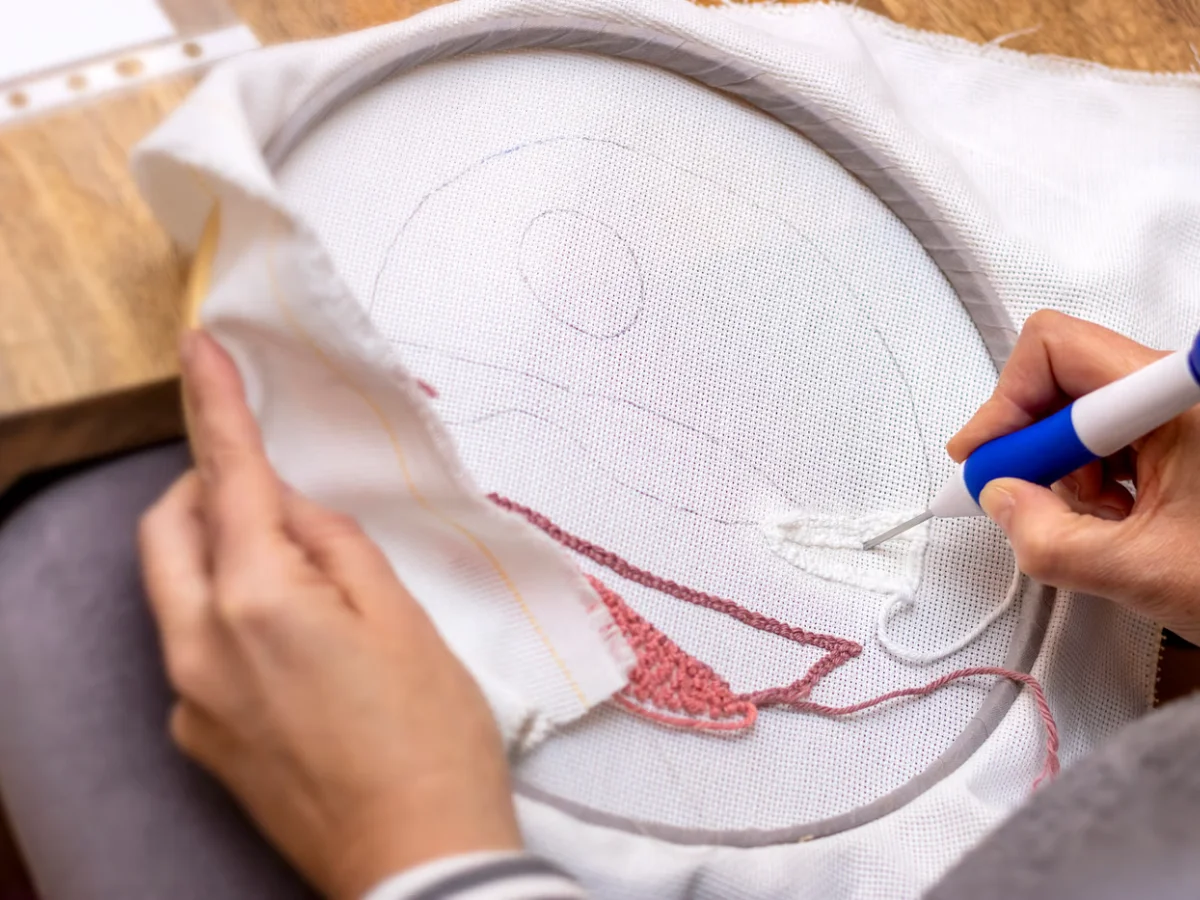
Hooping & stabilizing
The fabric is stretched taut in a hoop and backed with a cut-away, tear-away, or wash-away stabilizer depending on fabric weight and stretch, so the stitching doesn't pucker or distort the garment.
Per panel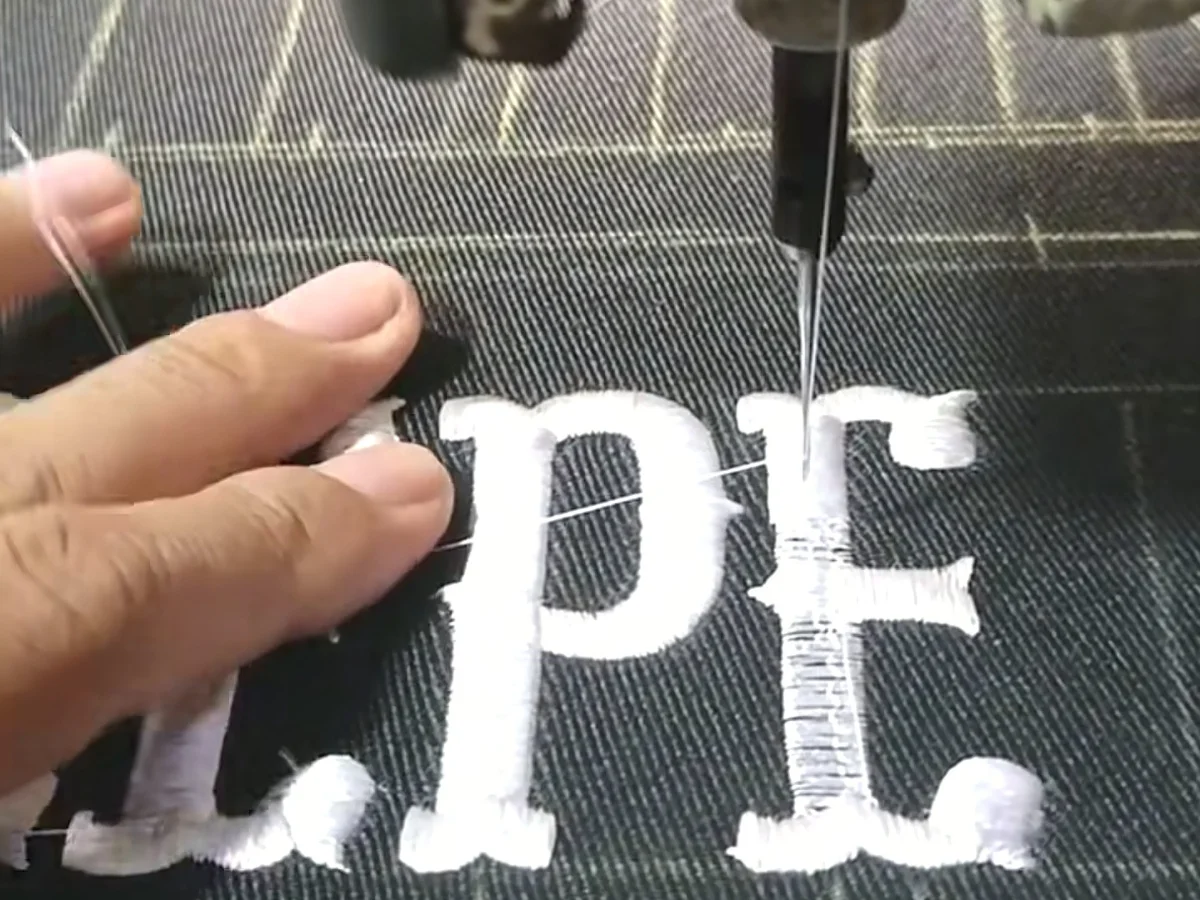
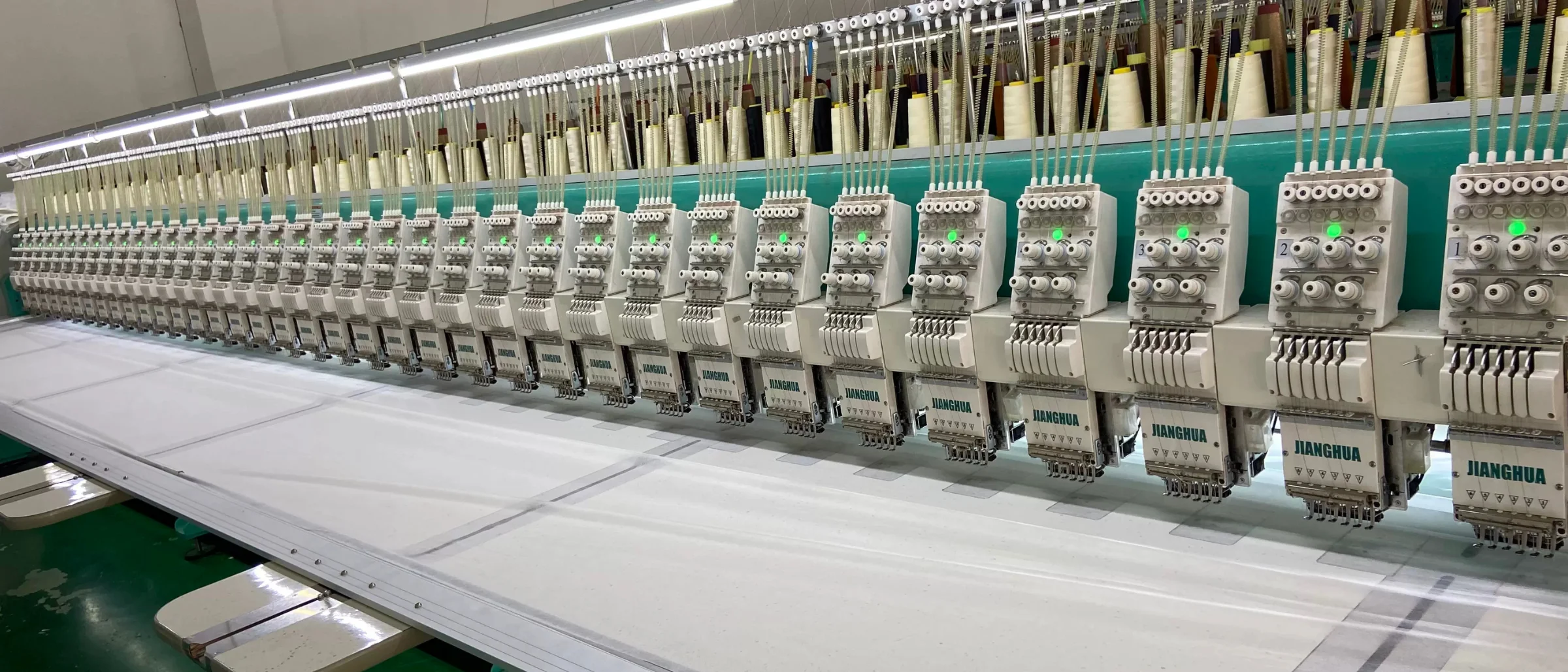
Stitching
A multi-needle machine follows the programmed stitch path and switches between preloaded thread colors at the color changes set by the digitizer. An operator monitors tension, registration, thread breaks and needle performance throughout the run.
Operator-monitored production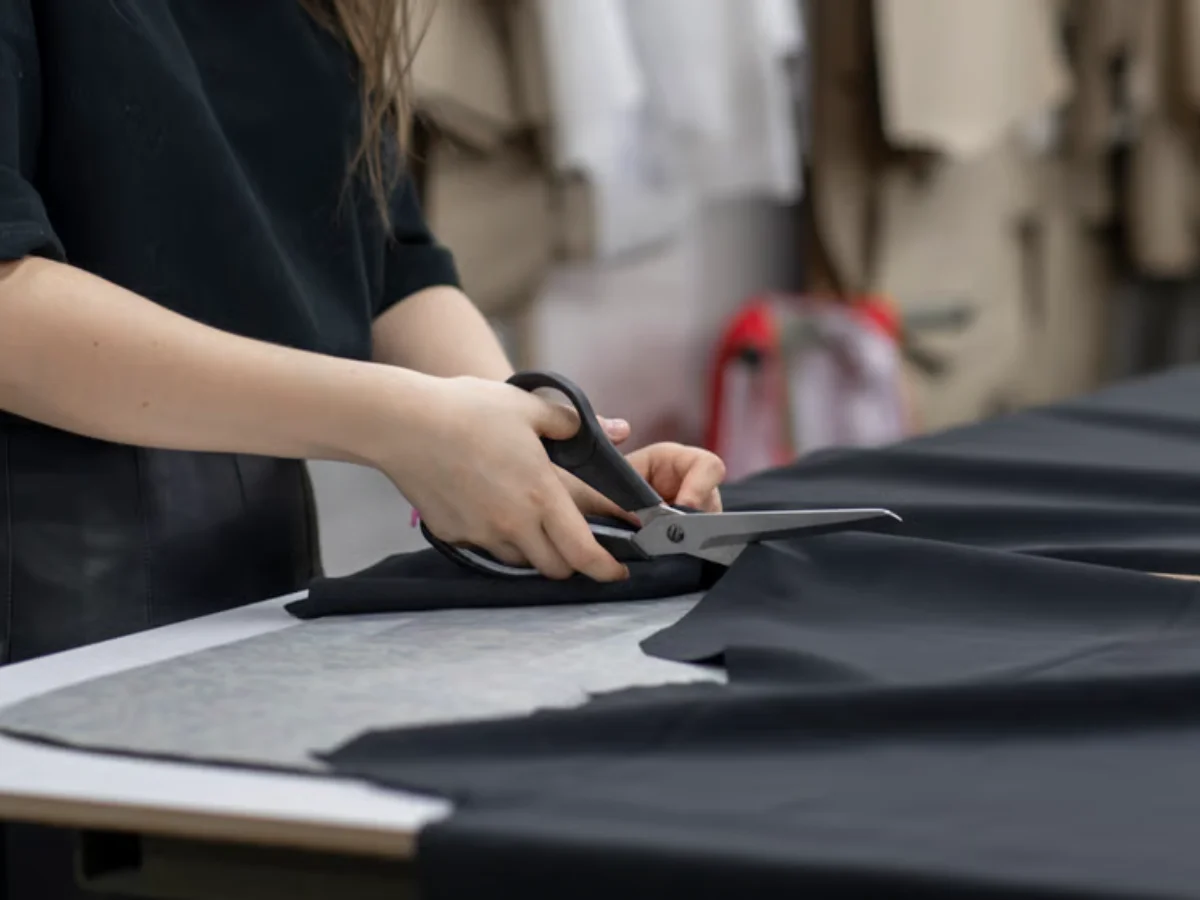
Trim & quality check
Loose jump stitches are trimmed by hand or machine, stabilizer backing is removed, and each piece is checked for thread breaks, puckering, and correct color placement before it moves on.
Per garmentStitch types and what "stitch density" means
A digitized design is built from a small set of stitch types, combined to fill different areas of the artwork. The digitizer chooses which type to use where, based on the shape and size of each element.
| Stitch type | Where it's used |
|---|---|
| Satin stitch | Narrow shapes, letters, and outlines — thread lies side by side across the width of the shape, giving a glossy, raised look. Not suitable for very wide fill areas, since long satin stitches snag and loosen over time. |
| Fill (tatami) stitch | Larger solid areas — a crosshatched pattern of shorter stitches that resists distortion better than satin at scale, used for backgrounds and bigger blocks of color. |
| Running stitch | Fine lines, outlines, travel paths and underlay that helps anchor the fabric before the visible top stitching is added. Very small text still requires sampling because thin strokes can disappear. |
| Chain stitch | A linked-loop stitch used for decorative outlines and selected chenille work. It creates a defined, cord-like texture. |
| Moss stitch | A looped stitch used to build the soft, raised surface associated with chenille letters, numbers and varsity-style patches. |
Stitch density is how tightly packed the stitches are within a filled area. Digitizers commonly express it as the spacing between stitch rows, but the correct setting is not universal: thread weight, fabric structure, underlay, stitch angle and the desired coverage all affect it. Excess density can make a panel stiff or cause puckering; insufficient density can expose the base fabric. The approved sample, rather than a single density number, should be the production standard.
Thread types, compared
| Thread | Characteristics |
|---|---|
| Polyester | The standard choice for most streetwear orders — strong, colorfast against washing and sunlight, and lower-cost than rayon. Slightly less glossy than rayon but generally the more practical option for garments that will be washed repeatedly. |
| Rayon | Higher sheen and a softer hand than polyester, historically the premium option for fine detail. More sensitive to chlorine bleach and harsh washing, so it suits garments with gentler care instructions rather than heavy workwear-style washing. |
| Metallic | Foil-wrapped or metallic-coated thread for accent details — adds shine but is more abrasive on machine needles and generally limited to small highlight areas rather than full fills. |
| Variegated / gradient | Thread that shifts color along its length, used for ombré or heathered effects within a single stitch run without switching thread cones. |
Placement and design limitations
What to check before finalizing artworkEmbroidery reproduces shapes differently than a printed file, so artwork that looks fine as a flat graphic can run into real constraints once it's digitized. These are the ones that come up most often.
Flat embroidery, 3D puff, and appliqué
Standard flat embroidery sits directly on the fabric surface. A few variations build on the same stitching process but change the construction:
3D puff embroidery stitches over a foam backing that's trimmed away after stitching, leaving a raised, domed surface — common on caps and chunky logo patches. It needs simpler shapes and lower detail than flat embroidery, since the foam limits how fine the stitch lines can be.
Appliqué stitches a separate piece of fabric onto the garment first, then embroiders around and sometimes over the edges. It's a practical way to cover large areas without the stiffness of a fully stitched fill, and it's often combined with satin-stitch borders for a clean edge.
Chenille uses specialized chain or moss stitches to create the dimensional texture associated with varsity-style lettering and patches. It is better suited to bold letters, numbers and shapes than very fine detail.
What we check before embroidery sampling
Artwork, garment and production fitA quotation alone cannot confirm that an embroidery design will sew cleanly. Before production, the artwork and garment must be reviewed together so that the approved sample reflects the intended result.
| What we assess | Why it matters |
|---|---|
| Artwork and file quality | Confirms whether small text, thin lines, gradients and overlapping shapes need to be simplified during digitizing. |
| Garment and fabric | Fabric weight, stretch, texture and panel construction determine the stabilizer, underlay and stitch density. |
| Placement and access | Seams, pockets, zippers, ribbing and narrow panels can limit hooping or require a placement adjustment. |
| Finish and coverage | Flat embroidery, 3D puff, appliqué and chenille require different artwork detail, materials and production setups. |
| Sample approval | The sew-out confirms thread color, scale, registration, hand feel and garment stability before bulk production. |
Frequently asked questions
What's the difference between flat embroidery and 3D puff embroidery?
How many thread colors can one embroidery design use?
Can embroidery be applied to stretch or performance fabrics?
What file format do I need to send for digitizing?
Does embroidery take longer to produce than printing?
Is embroidery more durable than screen printing?
How is custom embroidery pricing calculated?
What information should I send for a feasibility review?
How do you help prevent puckering around embroidery?
Thread and trim testing referenced above follows the OEKO-TEX® Standard 100 framework for harmful-substance testing, and thread colorfastness is assessed against methods such as ISO 105-X12 (colour fastness to rubbing).
Ready when you are
Have an embroidery design? Let's check feasibility.
Send your artwork or reference and we'll confirm digitizing feasibility, stitch approach, and placement before you commit to an order.
Reply within 24h · GMT+8 · English OK