For US Buyers
Partner in Manufacturing for US Streetwear Brands
In June, a Brooklyn company contacted us asking about the cost of tariffs on its fall order. We supplied the information. By August, when the order shipped, it was outdated – not due to our miscalculation, but because the US tariff system had been altered for clothing imported from China while the order was being produced. This is not a unique experience. The rates had changed several times over the course of the last eighteen months, and the present system came into effect just a couple of weeks before this page was last updated. Right now, if you are considering sourcing from China to the US, the volatility of tariffs is the number-one factor to take into account – more important than duty labeling and shipping logistics, which are relatively stable.
The following information is up-to-date as of early August 2026, based on USTR and CBP statements, not estimates. It will have to be verified before pricing out your order, and we'll remind you of the current rate at the quoting stage anyway.

The reason why the tariff number continues to shift
3 stacked layers, as of Aug 2026Currently, apparel products made in China have 3 distinct duty layers stacked on each other rather than one flat rate. First – the standard MFN base tariff used for years on the imports of apparel – it depends on the type of the garment, but normally is in the 14–17% range. Second – Section 301 duties applicable to the import since 2018–2019. And third, and the most recent – Section 301 forced-labor tariff imposed by USTR on July 23, 2026, and valid as of the next day for 60 economies including China – in total it adds a 12.5% duty, replacing the previously imposed flat 10% tariff from February 2026.
The stacked rate as of now is in the 30–35% range – as of the time of writing, however, the number can change due to 2 reasons. First, the HTS classification of a particular type of garment affects the specific rates that apply to it, so 2 different hoodie styles will be subject to 2 different rates. The second thing – the current duty rate structure is under legal contestation – there are multiple lawsuits filed on the very same day when the forced-labor tariff came into action, questioning the authority of USTR to introduce it, and an earlier version of tariffs was recently repealed by the Supreme Court in February 2026 after being in place for almost a year. However, none of these reasons invalidate the use of the current rate for planning purposes – it is simply the current valid rate. But it is not a safe bet to use the number quoted last quarter, let alone last month, without rechecking.
Practically, it works as follows – the particular HTS code for your garment is determined, and the current stacked rate is calculated based on it and put in the estimate, rather than the rounded industry average number. And it is recalculated before placing the order, because the production run takes 25–35 days, and the rate can change during that period.
Labeling Requirements of CPSC & FTC
Fixed, not volatileUnlike tariffs, the labeling and safety regulations in America have remained constant for some time now and are not part of the ongoing trade issues between the two countries. Under the labeling labeling regulation of the US government, as per the FTC, clothes must have a label indicating information about fiber content, country of origin, manufacturer name or that of any other business entity responsible, along with care instructions as per the Care Labeling Rule of the FTC. The “Made in China” or “Made in [country of origin]” label is a common one in all orders without being specific to those destined for the US only.
On the other hand, the wearing apparel is required to adhere to the flammability requirements of CPSC under 16 CFR Part 1610, where fabrics are classified according to burn rate in three categories, with the most flammable fabric prohibited from sale as apparel. The requirement is checked as part of normal fabric testing during sampling and is not a special process just for US orders.
How your order gets to a US port
Production → your warehouseSame three stages as every region we ship to — what's specific to the US is the duty calculation at step two, not the production or shipping process itself.
Production & labeling
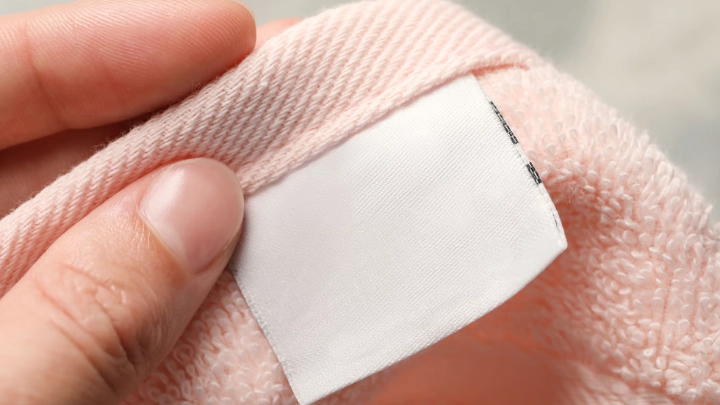
Fibre content, country of origin and care labels go on during the run, per FTC and CPSC requirements.
25–35 business days
QC & duty confirmation
100% inspection at AQL 2.5/4.0, plus a re-check of the HTS code and current combined duty rate before shipping.
2–3 business days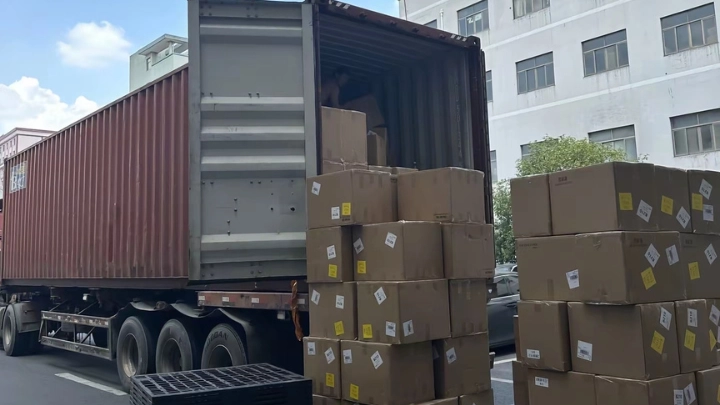
Sea freight & clearance
12–20 days to LA or Long Beach, one of the shorter routes we ship, then clearance under FOB, EXW or DDP.
12–20 days transitFOB vs EXW vs DDP
Which term fitsThe way the duty number is fluctuating currently makes the choice more relevant for US orders than other situations. The choice of FOB is great if the importer has an established relationship with a customs broker and wants to see the actual duty number that is charged in order to better understand the situation that occurs at the moment. EXW gives you maximum freedom but demands maximum tracking effort, which is rarely justified in the current situation. DDP is a more expensive option, but here the calculation of the duty rate at the time of clearance is done by the shipping partner and not the buyer, which is simpler for new clients not willing to follow tariff notices.
US, at a glance
Everything above in one place — treat the duty figure as a snapshot, not a quote, and confirm it before ordering.
| Item | What applies |
|---|---|
| Customs duty | ~30–35% combined (MFN + legacy Section 301 + forced-labor Section 301), as of early Aug 2026 — reconfirm at quote stage |
| Labeling | Fibre content, country of origin, manufacturer identity & care instructions — FTC-enforced |
| Flammability | Must meet CPSC 16 CFR Part 1610 fabric classification |
| Shipping | 12–20 days sea freight to LA/Long Beach; 3–7 days air freight, door to door |
| Terms available | FOB, EXW or DDP through freight partners |
Beyond duty compliance, what we can prove
Sustainability & complianceNone of these certifications affect the duties — they have no impact on duty compliance at the factory level because duty compliance is determined by trade laws and not by anything that can be controlled by the manufacturer. The only thing these certifications do is provide tangible proof to a US buyer regarding social compliance and testing, which is important for certain retail partners but not all. All three of OEKO-TEX Standard 100 testing, BSCI social compliance audit, and ISO 9001 certification are explained here in full detail.
Frequently asked questions
How much duty do we currently pay importing garments from China to the US?
Why does the US tariff rate keep changing?
What labeling does US law require on a garment?
Does clothing need to pass a flammability test to be sold in the US?
What's the typical shipping route and transit time from Dongguan to the US?
Can you handle DDP shipping to a US address directly?
Ready when you are
Sourcing from the US? Start with a quote.
Feasibility check and cost estimate — including a current duty figure, not a rounded average — within 2 business days. No tech pack yet? Send a reference — we'll help you build one.
Reply within 24h · GMT+8 · English OK · NDAs signed on request