Raw Denim & Selvedge Denim: How the Fade Actually Forms
Most pages in our Garment Washing section cover what we do to fabric after weaving. This page covers what we deliberately don’t do to raw denim: it ships unwashed, and its signature fading only develops later, through wear. Below, we cover the dyeing process, the loom type used, and how the selvedge edge ages over time. Ordering information is on the raw denim & selvedge denim page.
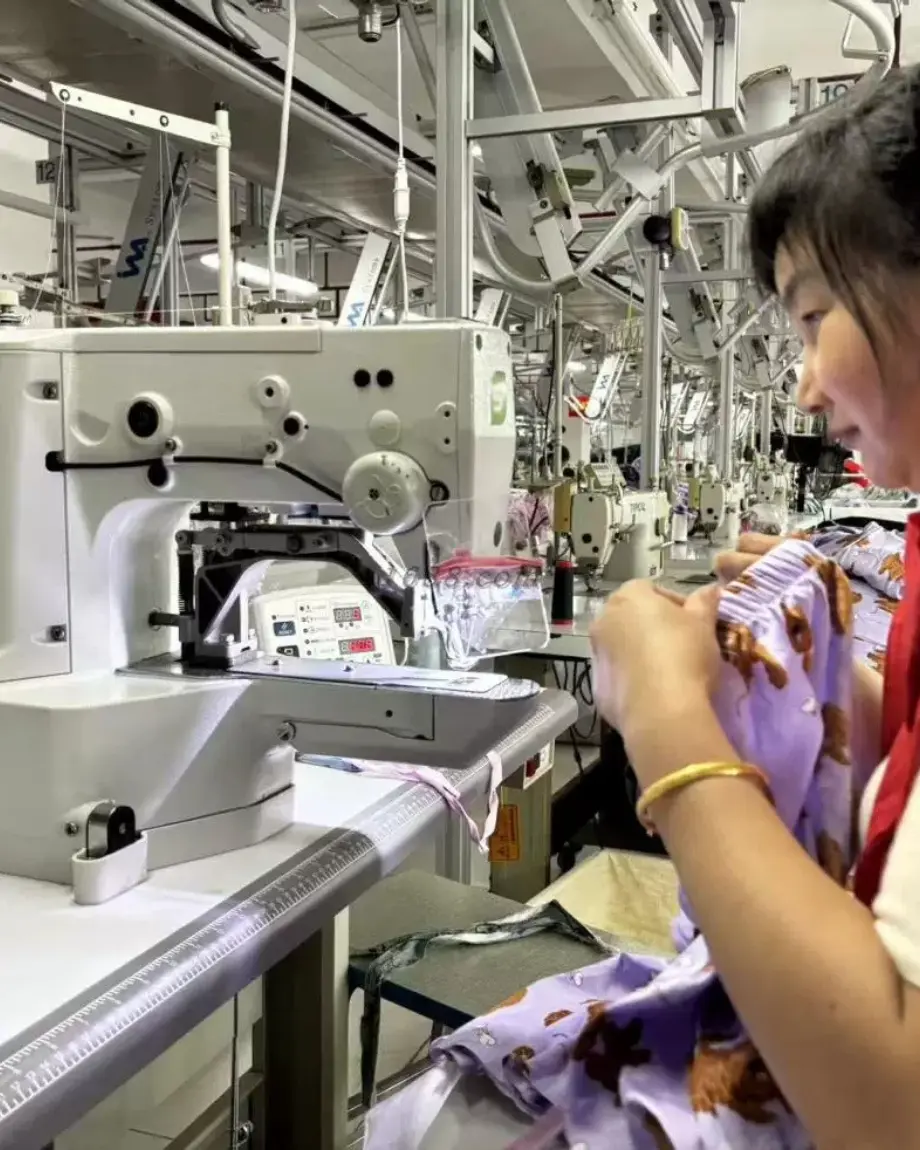
How the Fade Is Actually Formed
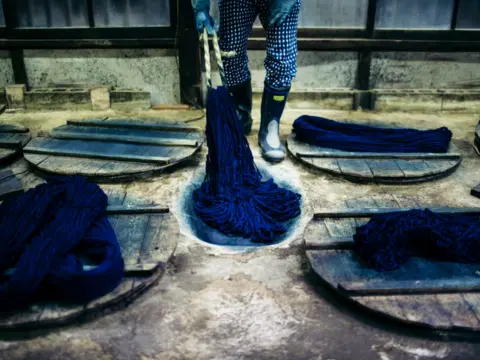
It’s chemistry, not just wearThe unique, high-contrast fading of raw denim comes from the dyeing process, not simply from wear. The vast majority of raw denim we process is rope-dyed: bundled warp yarns are dipped in indigo dye, pulled out and oxidized through exposure to air, then dyed again — around 12 or more cycles to build up color. This colors only the outer surface of each yarn, leaving the core white.
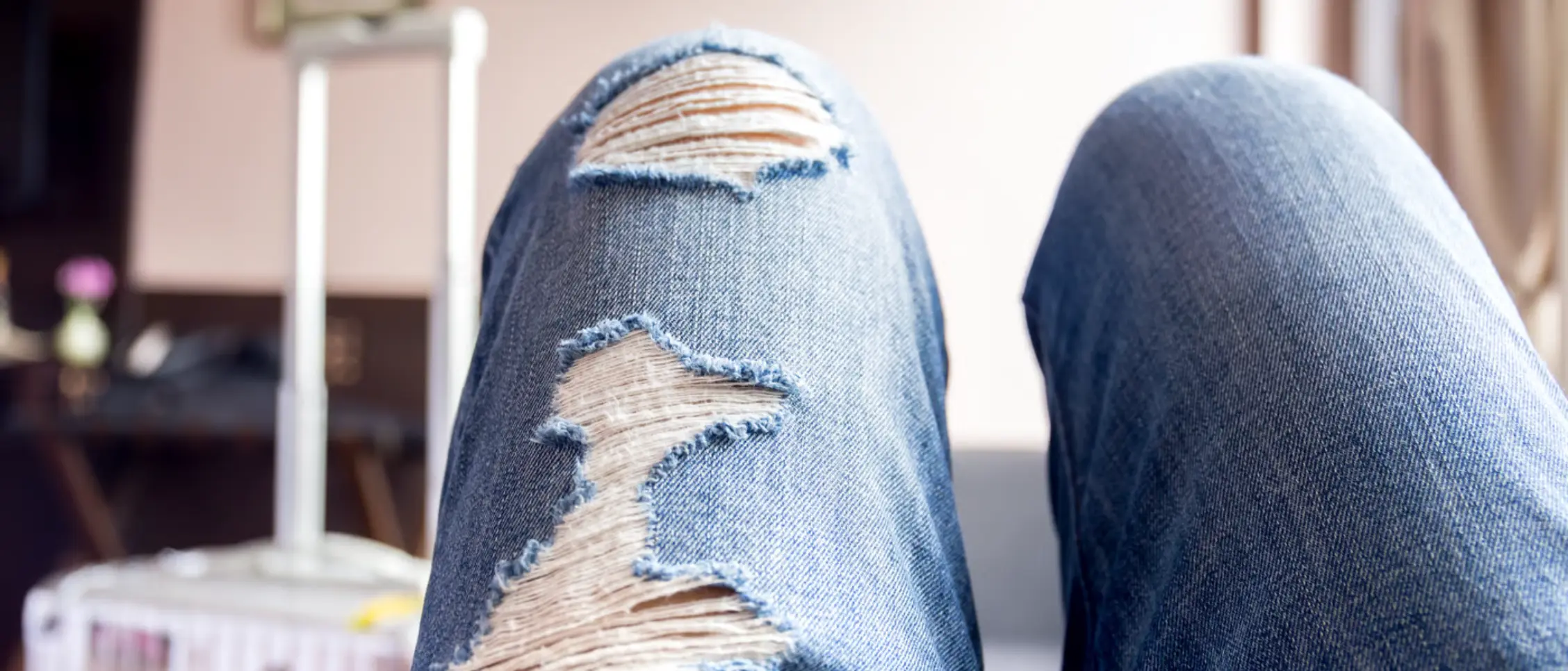
Fading doesn’t happen randomly — it follows the shape of the body. A honeycomb pattern forms behind the knee, where the fabric creases every time the wearer bends. Whiskering appears at the crotch and upper thighs, where the same folds recur with every step. Stacking builds up at the ankle, where the extra length bunches over the shoe with each stride.
What the fade timeline roughly looks like
Months, not weeksThere’s no fixed timeline for this process — it depends heavily on the wearer’s build, lifestyle, and how often the jeans are worn — but raw denim does tend to follow a rough, repeatable fade pattern. Fresh out of the box, the jeans are stiff from the sizing starch added during weaving, which takes a few wears to break down. Visible fading typically starts around the 2–3 month mark, first at the whiskers and honeycombs, since those are the points that crease with every movement.
Between the sixth month and the first year, contrast becomes visible at the most heavily worn points, and the denim has usually softened enough that the original stiffness is forgotten. This is typically the point at which a customer might want a wash, if they’d like to “freeze” the fade rather than let it keep developing — washing resets part of the contrast that’s built up.
None of this is under our control once the product ships — it depends entirely on how the customer wears it. Our responsibility ends at supplying the right materials and correct manufacturing so that further wear can develop into the best possible fade.
Shuttle Loom vs. Projectile Loom
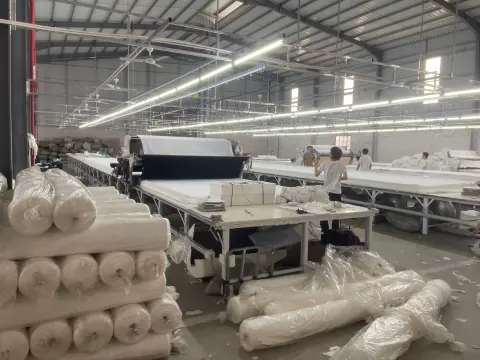
Where “selvedge” actually comes fromA shuttle loom weaves narrow fabric — around 30 inches wide — by passing a weft thread back and forth through the warp using a shuttle, which naturally seals both edges of the woven fabric as it goes. That sealed edge is called the selvedge, and it’s always marked with a colored ID thread.
A projectile loom weaves much wider fabric — 60 inches and up — by firing the weft thread across in one direction only, rather than back and forth. It’s significantly faster than a shuttle loom, but the cut edges fray and have to be overlocked. Most denim today is projectile woven; shuttle looms are reserved specifically for selvedge fabric.
| Factor | Shuttle loom (selvedge) | Projectile loom (standard) |
|---|---|---|
| Usable fabric width | ~30 in | 60 in and up |
| Weaving speed | Significantly slower | Much faster |
| Edge finish | Self-sealed (selvedge), no fraying | Raw, frayed edge — must be overlocked after cutting |
| Relative cost per yard | Higher | Lower |
| Typical availability | Limited — low mill volumes, often booked out in advance | Widely available |
The narrower width has direct cost implications worth understanding before you order: selvedge fabric is produced on a loom that yields roughly half the usable width of a projectile loom, at a slower run speed — which pushes the per-yard price higher and increases cutting loss per pair of jeans.
Selvedge fabric also isn’t always available on short notice, since the mills running shuttle looms operate at low volumes and often book their yardage well ahead of production. If you’re planning to use selvedge fabric for a particular season, it’s worth raising early.
The ID Line in the Selvedge
Not just decoration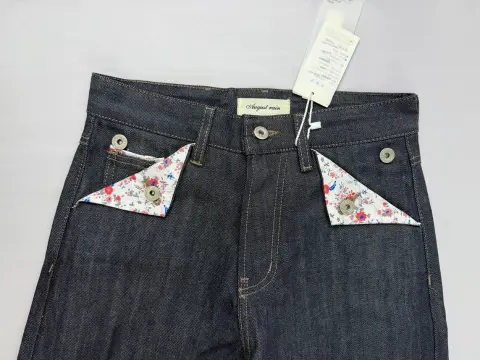
The contrasting thread running along the selvedge edge — most commonly red, a tradition dating back to early Levi’s and Cone Mills denim — originally let mills identify which loom or fabric run a bolt came from. It has since become something buyers proudly show off by cuffing the hem.
The ID line color can be customized to a brand’s specification — it’s a small, low-cost customization, but it has to be agreed with the mill before weaving, not after the bolt is already made.
Sanforized vs. Unsanforized — A Sizing Choice, Not a Quality Choice
This changes what “true to size” meansSanforizing is a mechanical pre-shrinking process applied before cutting, and it works on any type of denim, including raw. Sanforized raw denim still shrinks slightly on its first wash — usually under 3% — and fits close to true-to-size from day one.
Unsanforized denim skips that step, which is why traditionalists prefer it — the fabric is closer to its original state and molds to the body gradually. The trade-off: the first wash causes 3–10% shrinkage, depending on the fabric, and that has to be built into the pattern grading. When ordering unsanforized denim, publish both pre-wash and post-wash measurements on the size chart — a single number quietly assumes sanforizing that hasn’t happened.
| Factor | Sanforized | Unsanforized |
|---|---|---|
| Pre-shrunk before cutting | Yes | No |
| First-wash shrinkage | < 3% | 3–10% |
| Fit out of the box | True to size | Runs larger until first wash |
| Size chart requirement | Single post-wash figure is fine | Must show pre-wash AND post-wash sizes |
| Typical buyer | Standard retail fit expectations | Raw denim traditionalists / heritage brands |
The Quality Control That Happens Before Washing — Because After, There’s Nowhere Left to Hide
Nowhere for a defect to hideWashing conceals many small imperfections — an off shade or a minor weaving flaw tends to blend in after even one wash cycle. Not with raw denim. What ships is exactly what the customer receives on day one. To confirm there are no issues with shading, weave flaws, or incorrect selvedge positioning, we run quality assurance before cutting, under bright light, rather than after washing. It takes more time, and we build that into the production timeline.
Order It, or See Fabric Weight Information First
Two places to go from hereReady to specify your run? The raw denim & selvedge denim page covers weights, fit, MOQ, and price. Not sure which fabric weight you need? The fabrics & GSM guide covers the 13–16 oz. range typically used for raw and selvedge denim.
Frequently Asked Questions
Raw denim, straight answersWhy does raw denim fade differently than regular jeans?
What’s the actual difference between raw and selvedge denim?
What’s the difference between a shuttle loom and a projectile loom?
Is your raw denim sanforized or unsanforized?
How do you quality-check denim that hasn’t been washed yet?
Do you weave your own selvedge fabric or source it?
Deciding between sanforized and raw selvedge?
Tell us the weight.
We’ll walk you through
the trade-offs.
Send your target weight, fit and whether you want sanforized or unsanforized fabric, and we’ll come back with a feasibility check and cost estimate within 2 business days.
Reply within 24h · GMT+8 · English OK · NDAs signed on request