OEM Garment Decoration
Custom Screen Printing for Streetwear Brands
FORGEMFG provides custom screen printing for private-label streetwear, including T-shirts, hoodies and washed garments. We offer plastisol, water-based and discharge printing, with a standard minimum order of 50 pieces per style and colorway, subject to artwork, fabric and print-feasibility approval.
Send the artwork file, intended print size, placement, garment fabric and estimated quantity at the inquiry stage. Conventional spot-color artwork normally requires a separate screen for each ink color, so color count is a major setup and pricing factor. Fabric, print area, ink system, garment construction and testing requirements can also affect feasibility, cost and lead time.
What is screen printing?
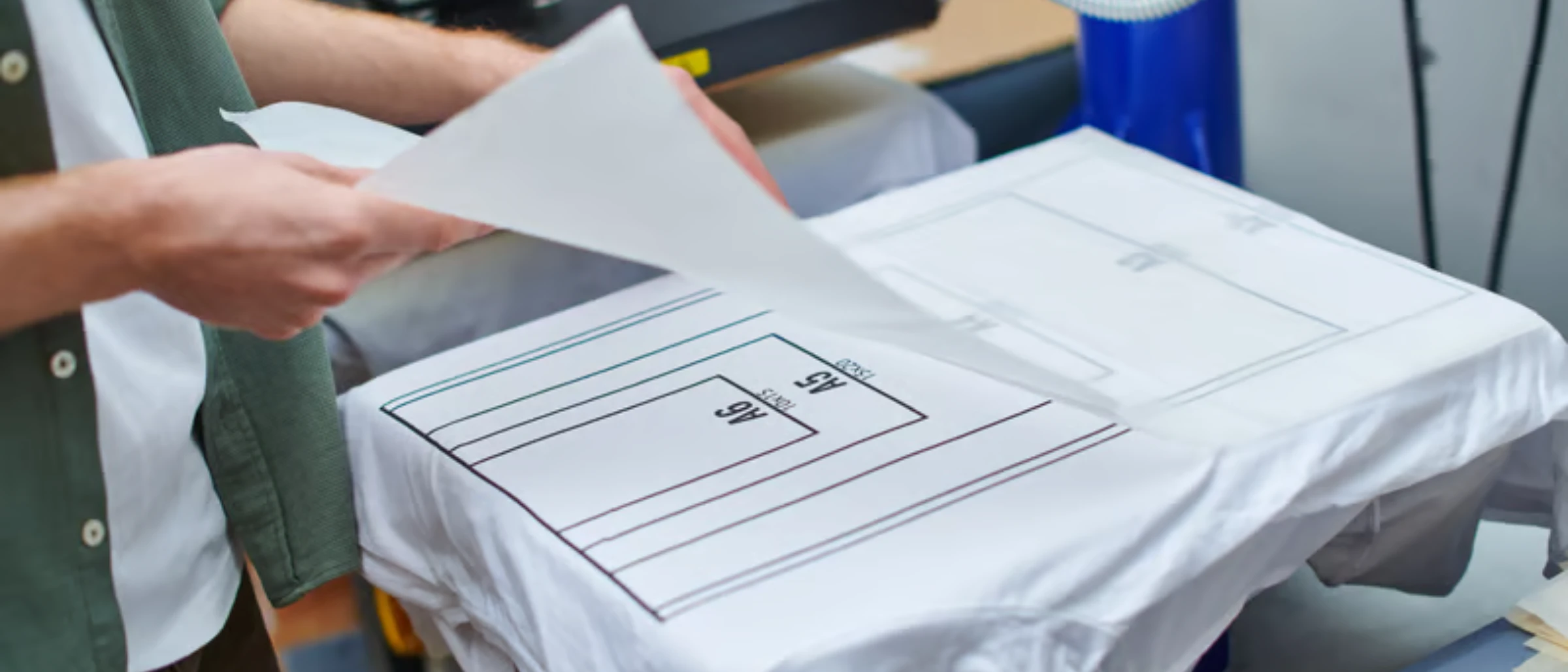
Direct definitionScreen printing, also called silkscreen printing, transfers ink through a stencil held in a fine mesh screen. A squeegee draws ink across the screen so it passes through the open areas and onto the garment. Conventional spot-color artwork normally uses one screen per ink color; process and simulated-process work use more complex separations to reproduce tonal artwork.
The finished hand-feel depends on the ink system and deposit. Plastisol generally creates a more noticeable ink layer, while water-based and discharge systems can produce a softer finish. Spot colors can be matched to an agreed Pantone reference or physical swatch and confirmed on a printed strike-off because ink appearance changes with fabric color, texture and lighting.
How the process works, step by step
Art to pre-shipment QCArt & color separation
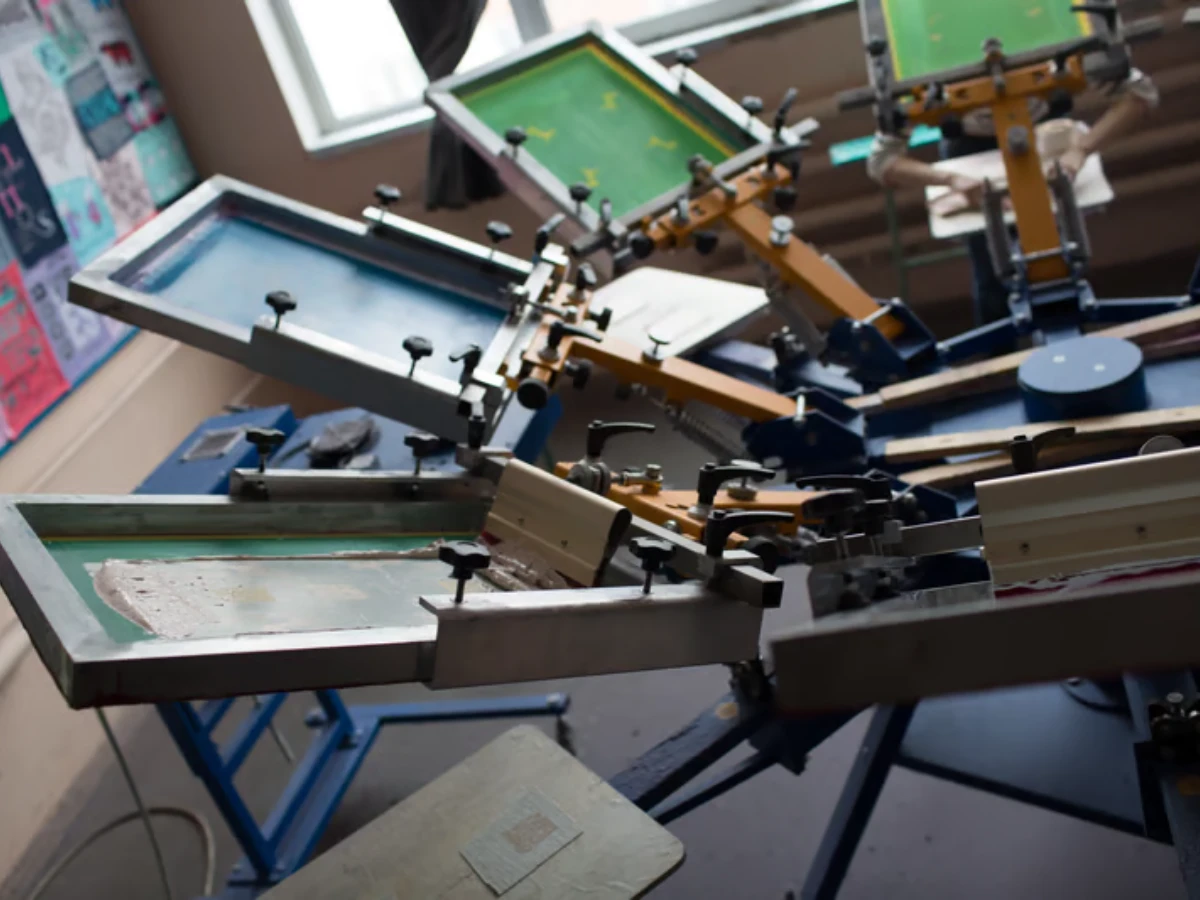
Artwork is separated into one flat color per screen. A five-color logo needs five screens, five squeegee passes, and five registration checks to land every layer in the same spot. Gradients and photographic detail are converted to halftone dots rather than printed as continuous tone.
Screen & mesh setup
Each screen is coated with photo-emulsion, exposed with the separated artwork, and washed out to leave an open stencil. Mesh count is matched to the ink and the level of detail: a coarser mesh moves more ink for solid coverage on dark shirts, while a finer mesh holds crisp small text and halftones without flooding the design.
Press setup & registration
Screens are loaded onto a carousel press and aligned pass by pass until every color lands on register. This is checked against the approved sample before a single production piece runs, not adjusted mid-batch. Registration tolerance is held tighter on multi-color artwork with fine outlines than on a bold single-color logo, since a small shift is far more visible where two ink layers meet.
Printing & curing
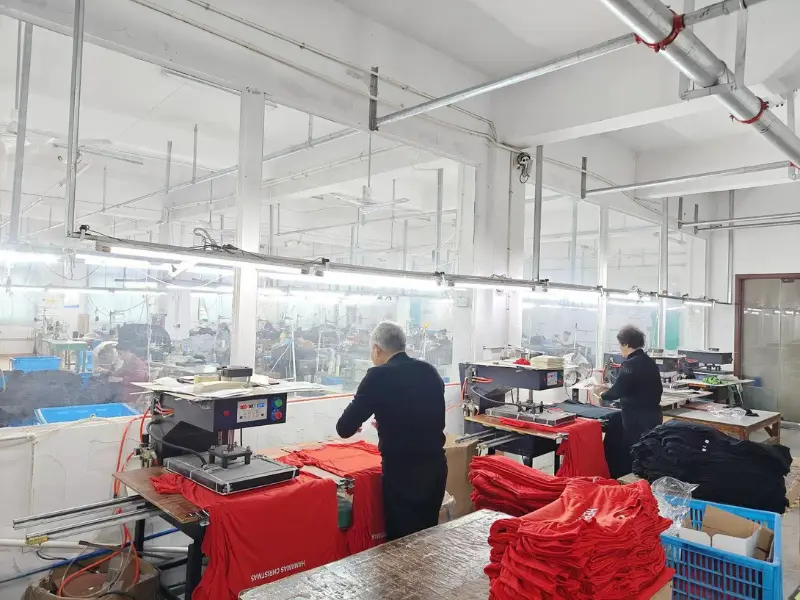
Ink is printed through each screen in sequence, with flash curing between colors when the artwork requires it. The completed garment then passes through a drying tunnel. Cure time and temperature follow the selected ink manufacturer's technical data sheet; many conventional plastisol systems cure near 320°F (160°C), while low-cure and specialty inks use different profiles. The target temperature must be achieved through the ink film, not merely shown on the dryer display.
QC & packing
Printed pieces are checked against the approved sample for registration, placement, ink coverage and color appearance. The finished order then undergoes the agreed pre-shipment sampling inspection. Where specified, AQL 2.5 applies to major defects and AQL 4.0 to minor defects; wash durability and colorfastness are separate tests rather than part of a visual AQL check.
Ink types we print with
Matched to fabric & finishWhich ink makes sense depends on the fabric, the base color, and how the finished print is meant to feel. We run three ink systems, summarized below.
| Ink type | Best for | Hand-feel | Fabric compatibility | Limitation |
|---|---|---|---|---|
| Plastisol | Bold graphics, spot color, dark garments | Slightly raised, opaque | Cotton and many cotton blends; polyester, nylon and performance fabrics require compatible ink and testing | Large or heavy deposits can feel stiff; some synthetics need low-cure ink, blockers or additives |
| Water-based | Soft-hand prints, lighter garments, vintage look | Soaks in, almost no hand | Best on absorbent natural fibers; fabric-specific systems are needed for many synthetics | Standard formulas have lower opacity; high-solids systems and underbases can support dark garments |
| Discharge | Soft, faded vintage prints on dark cotton | Very soft — removes or alters the garment dye and may deposit replacement pigment | Best on suitably reactive-dyed cotton; every color and dye lot requires testing | Results vary on non-dischargeable dyes, pigment-dyed fabric and polyester blends |
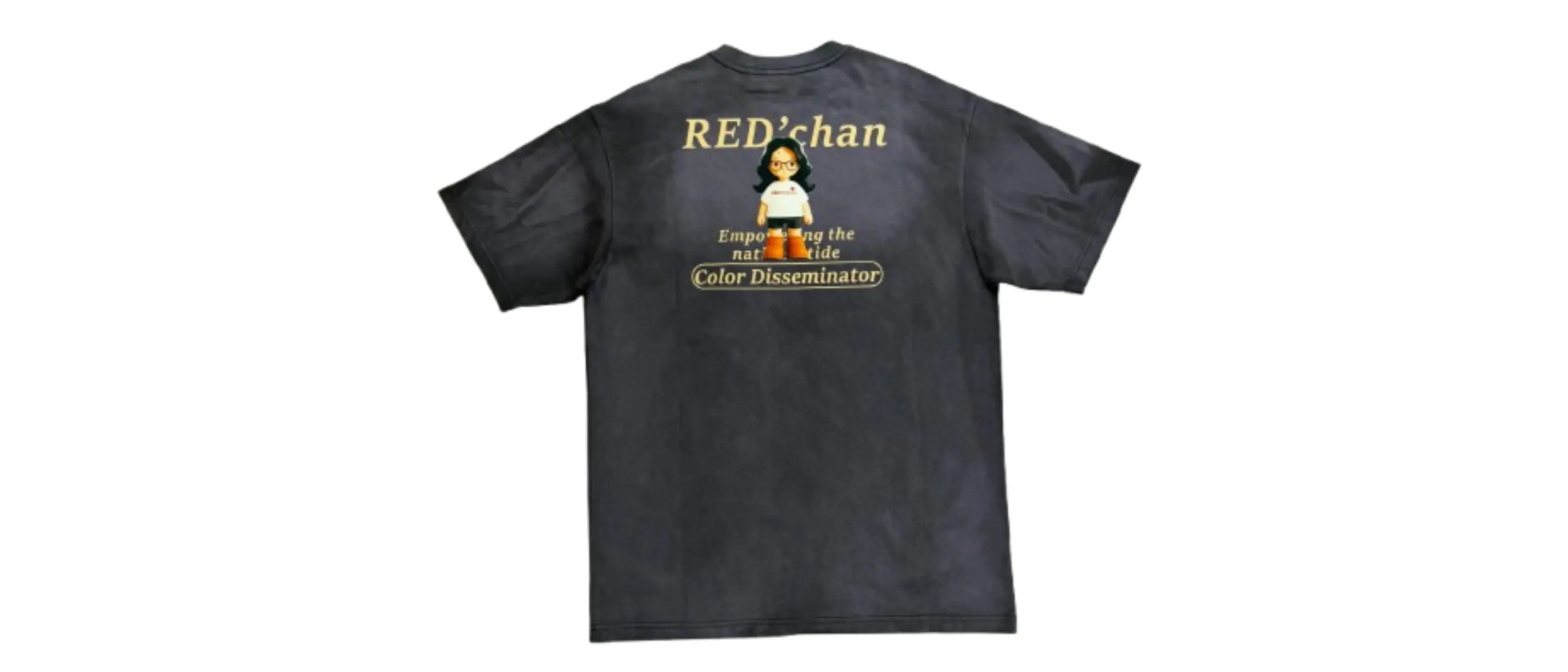
A related option some buyers ask for by name is a crack print or vintage print finish: plastisol ink applied thin and cured so it develops a deliberately cracked, worn-in texture, usually paired with a vintage or distressed wash program rather than a clean, fresh garment.
Screen printing specifications
What to send for reviewA reliable quotation needs more than a logo. Send the final artwork, garment type, fabric composition, garment color, print placement, finished print dimensions and quantity by size and colorway. We use those details to confirm the required screens, ink system, sample route and production feasibility.
| Specification | Standard guidance | What can change it |
|---|---|---|
| Minimum order | 50 pieces per style and colorway | Artwork, fabric, garment construction and print placement |
| Artwork | Vector artwork preferred; supply fonts as outlines and identify spot colors | Raster, halftone and photographic artwork may require separation work |
| Color approval | Agreed Pantone reference or physical swatch, confirmed on a strike-off | Fabric color, texture, ink opacity and viewing light |
| Sampling | Typical target: 7–15 days after complete artwork and material confirmation | Fabric availability, color count, specialty ink and revision rounds |
| Bulk production | Confirmed after sample approval and order review | Order size, material sourcing, testing and finishing requirements |
Maximum color count, print area and placement depend on the press, garment panel and artwork. We confirm those limits from the actual production file rather than publishing a universal maximum that may not apply to every garment.
What drives cost and turnaround
Screen printing pricing follows the number of screens, not the number of pieces. Every additional color in a design means another screen, another pass on press, and another registration check, so a one-color logo and a five-color graphic are functionally different jobs even at the same quantity. This is the main reason a design gets simplified or a color gets dropped during the feasibility stage — not to cut corners, but because reducing screen count is usually the single biggest lever on unit price.
For repeat orders, we retain approved artwork, color references, ink information and production notes. Physical screens may be reclaimed and need to be remade, so setup charges, strike-off approval and lead time are confirmed case by case. A repeat order does not automatically bypass material, color or quality checks.
For blank garment options, exact MOQ, and current pricing tiers by color count, see our screen print t-shirts ordering page — this page covers the process, not the price list.
Durability & wash care
What to check on a sampleScreen-print durability depends on ink selection, fabric, pretreatment, deposit thickness and the verified cure profile. Plastisol generally forms a durable film on the fabric surface. Water-based ink penetrates the fibers more deeply, while discharge ink alters the garment dye and may add replacement pigment. These systems produce different hand-feel and aging characteristics, so the approved sample should be evaluated using the intended care conditions.
Visual pre-shipment inspection checks placement, registration, coverage and appearance. When wash durability or colorfastness is part of the agreed testing protocol, it is tested separately using the specified method. For routine care, wash the garment inside out, follow its care label, avoid ironing directly over the print and use low dryer heat when tumble drying is permitted.
Color limitations, and when digital printing fits better
Conventional spot-color screen printing is strongest on logos, type and graphic artwork with a defined color count. Each added spot color normally requires another screen, press station and registration step. Halftone, process-color and simulated-process separations can reproduce gradients and photographic detail, but they require artwork review, controlled separations and additional setup.
DTG or DTF may be more practical for high-color or photographic artwork, personalized pieces and very small runs where separate screen setup is inefficient. The best method depends on fabric, quantity, artwork, hand-feel, durability target and budget; digital printing is not automatically less durable in every application. Many streetwear collections use more than one decoration method.
Screen printing on washed & garment-dyed pieces
For most finished washed or garment-dyed programs, printing is completed after the garment reaches its final dimensions and surface texture. If the design is intended to age together with a vintage wash, printing may occur earlier in the sequence. We confirm the order of operations during sampling because dye chemistry, shrinkage, abrasion and heat exposure can change the final print.
Frequently asked questions
What ink types does FORGEMFG use for screen printing?
How many colors can be screen printed on one design?
Is screen printing more durable than DTG or DTF?
Can screen printing be done on garment-dyed or washed fabric?
What's the minimum order quantity for screen printing?
Are the inks used safe and compliant for import into the US and EU?
What artwork should I send for a screen-printing quote?
How long do sampling and bulk production take?
Ready when you are
Have artwork ready? Start with a quote.
Feasibility check and cost estimate within 2 business days. Send your design file and color count and we'll confirm screen count and turnaround.
Reply within 24h · GMT+8 · English OK · NDAs signed on request