Custom woven & knitted jacquard
Custom Jacquard Fabric & Garment Manufacturing
Jacquard fabric is a woven or knitted textile in which the pattern is created during fabric construction rather than printed onto the finished surface. Woven jacquard uses programmed warp selection on a loom, while knitted jacquard uses selected needles and yarn feeds to form the design directly in the knitted structure.
FORGEMFG develops custom jacquard for sweaters, jackets, overshirts, panels and other streetwear garments. Send a reference image, repeat artwork or physical swatch and our production team will confirm the suitable construction, yarn options, sampling route, garment MOQ and estimated lead time before bulk production.
Written and technically reviewed by Andy Yu · Updated September 20, 2026
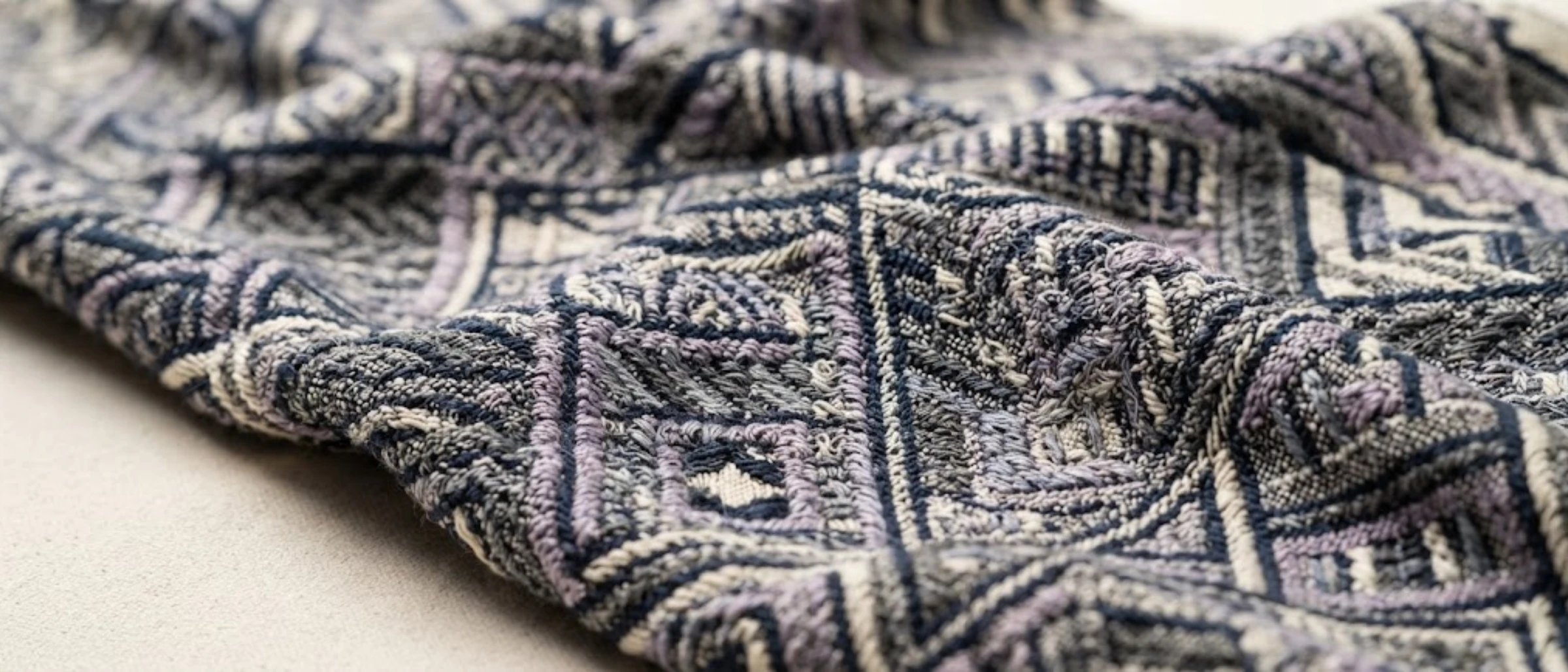
How a jacquard pattern gets woven in
The mechanismConventional shaft looms control groups of warp ends through harnesses. A jacquard mechanism can selectively control individual warp ends or configured groups according to a programmed design. Historically this was achieved with punched cards; modern equipment uses digital files and electronically controlled hooks. This more precise selection makes complex motifs and larger repeats possible, as described in Encyclopaedia Britannica's technical description of the mechanism.
Jacquard knitting is a separate process. Flat or circular knitting machines select needles and yarn feeds to form patterned loops; they do not operate warp threads like a loom. Both methods build the artwork into the fabric, but they use different machinery and create different stretch, weight, drape and reverse-side structures.
| Jacquard type | Made on | Typical fabric | Typical garment use |
|---|---|---|---|
| Woven jacquard | Loom with a jacquard head | Shirting-weight to heavier structured wovens | Structured panels, jackets, woven overshirts |
| Knitted jacquard | Flat or circular knitting machine, jacquard-capable | Lightweight to sweater-weight knit, depending on gauge | Sweaters, polos, knit shirts and structured knitwear |
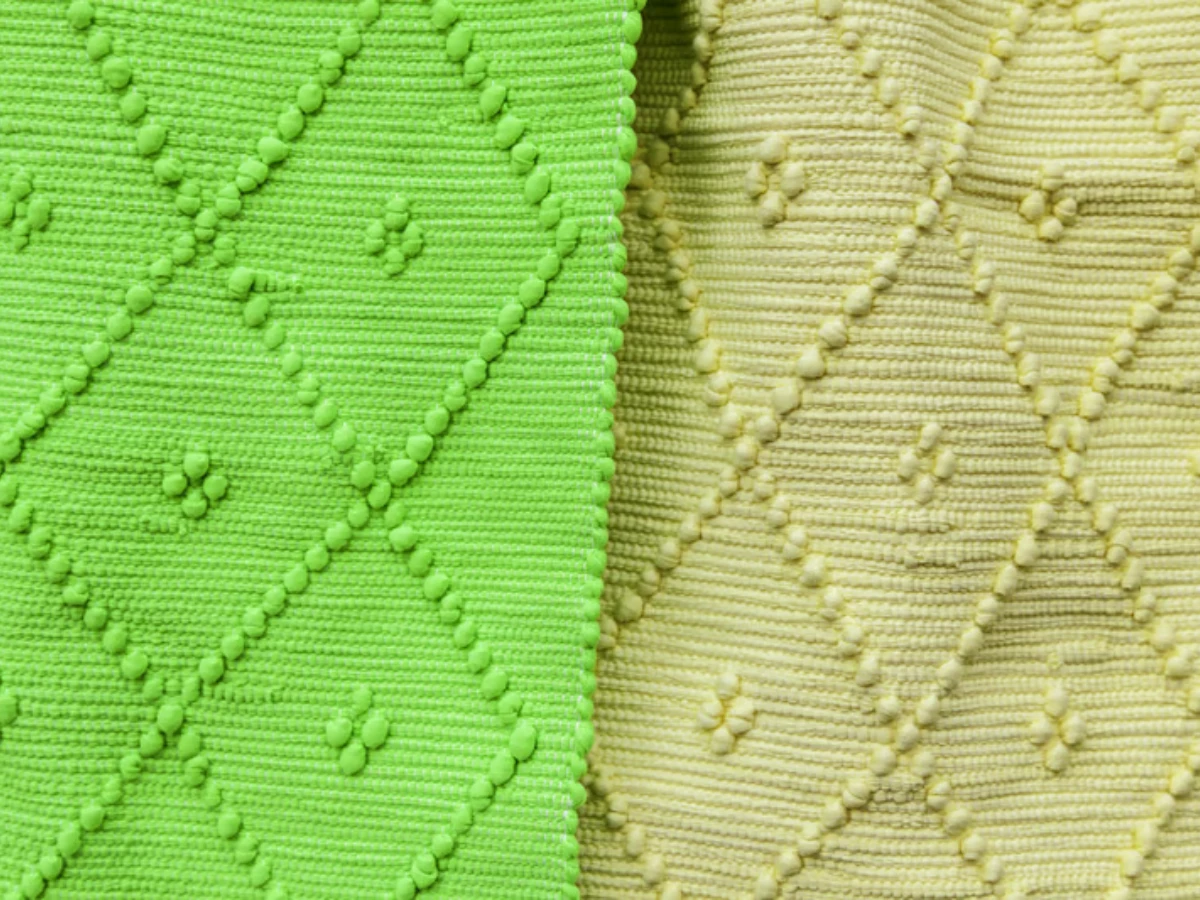
What jacquard changes about the fabric
Many jacquard constructions show a recognizable reverse pattern, but that does not make every jacquard reversible. The back may contain floats, carried yarns or binding structures that are not intended to be exposed. The surface can be flat, tonal, raised, multicolored or dimensional depending on the weave or knit structure, yarn count, fiber, tension and finishing.
Jacquard is not automatically heavy. Lightweight shirting, silk-like fabrics and fine-gauge knits are possible, while multilayer or heavier-yarn constructions can create more body. Color capacity depends on the machine, feeder setup, yarn system and construction. Logos, monograms, florals, geometric motifs and figurative repeats can work well, while photographic gradients are usually better suited to digital printing.
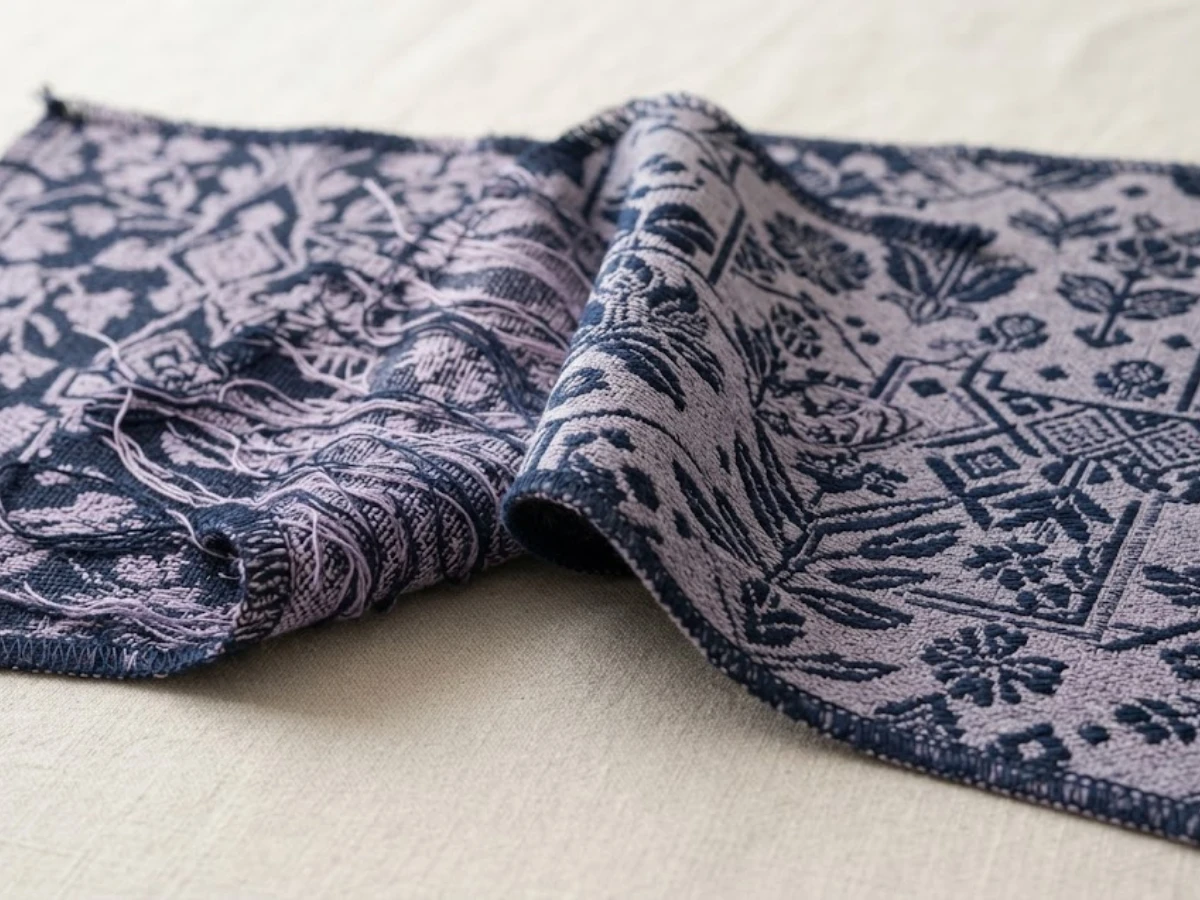
Jacquard design and material options
Confirmed per projectFeasibility depends on the intended garment, fiber blend, yarn count, fabric weight or knitting gauge, motif scale, repeat size, color count and finishing method. Cotton, polyester, wool, acrylic, viscose and blended yarns may be considered subject to sourcing and machine compatibility. Exact ranges should be confirmed from the artwork rather than assumed from a screen mockup.
| Input | What to provide | Why it matters |
|---|---|---|
| Artwork | Vector file, repeat tile or clear reference | Determines motif resolution and repeat engineering |
| Colors | Pantone references or approved physical swatch | Supports yarn matching and color approval |
| Garment | Tech pack, measurements and intended placement | Guides fabric construction, scale and cutting |
| Performance | Target hand feel, stretch, weight and care needs | Guides yarn, gauge, weave and finishing choices |
Quality control for jacquard production
- Float length is checked against the design. Long floats — stretches where a thread skips over several others to form part of the pattern — are more prone to snagging, so the pattern is reviewed for float length before production begins, alongside the usual visual review.
- Tension is monitored across the repeat. Because different areas of a jacquard pattern pull different numbers of threads at once, uneven tension can show up as puckering or a skewed motif if it isn't controlled through the weaving or knitting run.
- Yarn colorfastness is confirmed before the pattern is woven. Since the colors are built in at the yarn stage rather than printed afterward, any dye-fastness issue in the yarn shows up across the whole pattern, so yarn lots are checked before they go on the machine rather than being left to final inspection alone.
- A physical fabric swatch is approved before bulk. Jacquard pattern scale and color balance are easier to judge on cloth than in a flat digital rendering, so a swatch — not a screen mockup — is the approval step before a run is committed.
- Finished performance is checked for the intended use. Relevant checks may include dimensional stability, pilling, snagging, appearance after washing and motif alignment. The test plan is confirmed according to the fiber, garment and buyer's requirements.
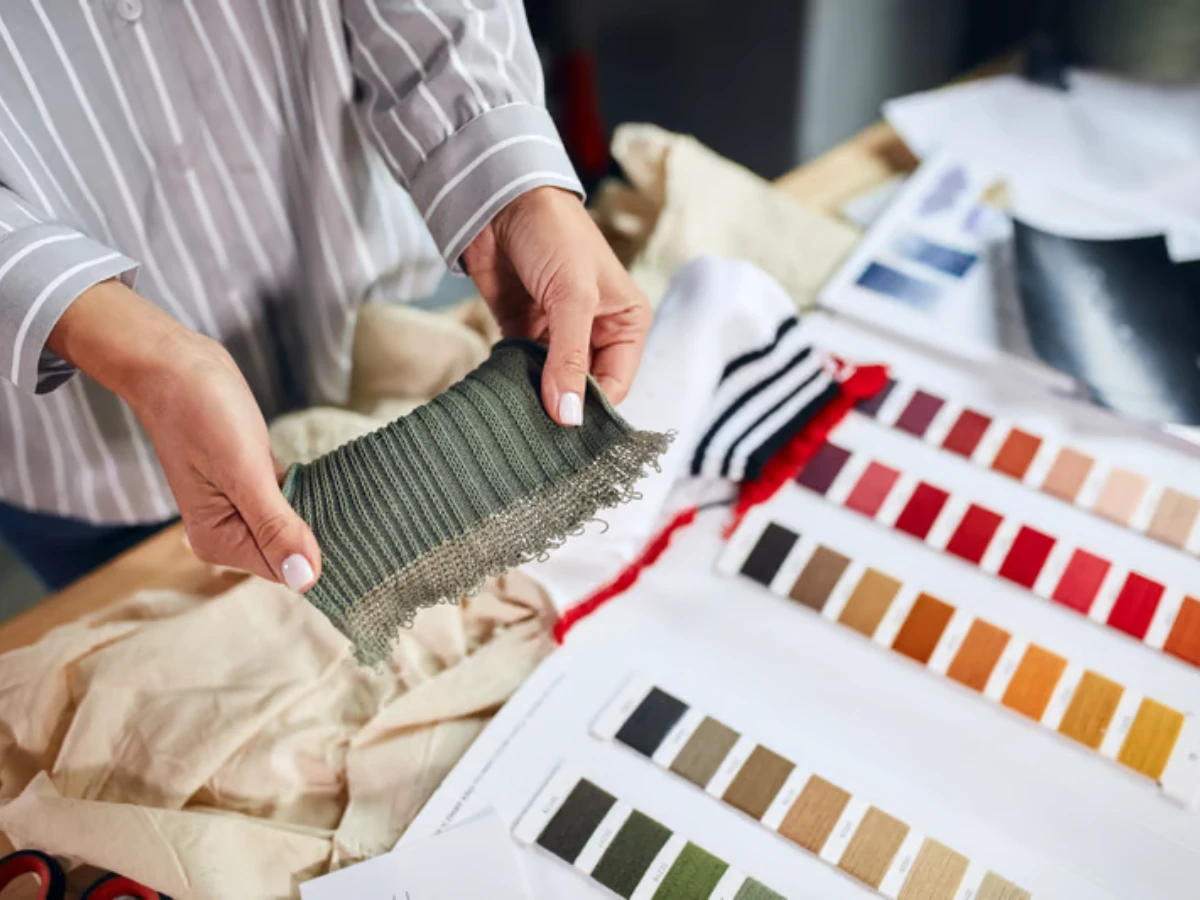
Ordering considerations
Our garment MOQ starts at 50 pieces per style and colorway. Custom fabric, yarn-dyeing or mill minimums may apply separately depending on the selected yarn, pattern complexity, gauge, repeat size and color availability. Sampling and bulk lead times are confirmed only after the construction and sourcing route have been reviewed. Providing artwork, garment type, target quantity, size range, fiber preference and delivery market helps us prepare a more accurate feasibility and cost estimate.
Jacquard vs printing vs embroidery
| Method | How the design is made | Best suited to | Main consideration |
|---|---|---|---|
| Jacquard | Pattern formed within the woven or knitted structure | Repeats, monograms, logos and textile-wide motifs | Machine, yarn, repeat and color limits |
| Printing | Ink or dye applied to the fabric surface | Detailed artwork, gradients and photographic effects | Coverage, hand feel and print durability vary by method |
| Embroidery | Stitches added to a finished fabric or garment panel | Placed logos, badges and localized decoration | Stitch density, backing and fabric stability |
Frequently asked questions
What is jacquard weaving?
How is jacquard different from a printed pattern?
What garments work well with jacquard?
Does jacquard use knitting or weaving?
What is the MOQ for garments made with custom jacquard?
Can jacquard fabric be combined with printing or embroidery?
Is jacquard fabric reversible?
What affects custom jacquard cost and lead time?
Ready when you are
Have a pattern in mind? Start with a quote.
Send your reference image, repeat artwork, tech pack, target quantity and delivery market. We will review whether a woven or knitted construction is suitable and identify any yarn or mill minimums before quoting.
Reply within 24h · GMT+8 · English OK · NDAs signed on request