Snow Wash Hoodies
Custom Snow Wash Hoodie Manufacturer
Snow wash gets requested by buyers who've already ruled out acid wash — usually because a reference photo or a competitor's piece read as too loud, too high-contrast, for what they're building. The frosted, evenly mottled finish is the quieter option of the two, and it behaves differently enough on fabric and color that treating it as "acid wash but lighter" tends to produce a sample that misses the brief. This page covers what's available to order — grades, fabric, color, construction and price impact. How the wash itself is physically produced is covered in more depth on our snow wash process, if that level of detail is useful before you commit.
The most useful thing to bring to a first message isn't a perfect spec — it's a reference photo and a sense of how loud or quiet the finish should read. The grade system below turns that into something concrete enough to sample against on the first try.
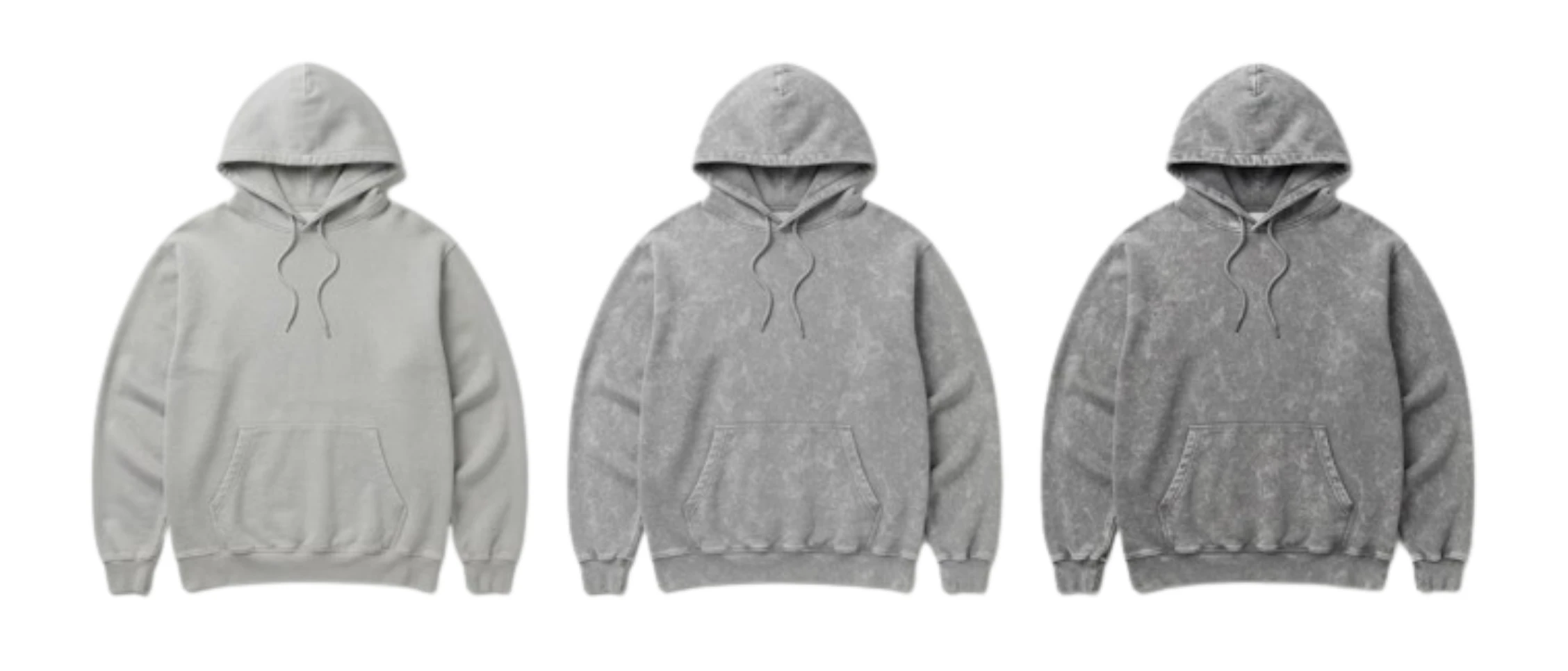
Wash grades, G1 to G3
Approved on real swatches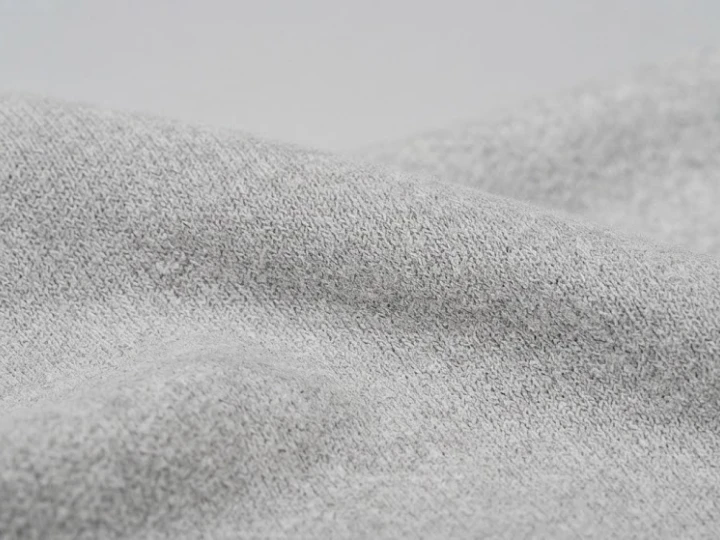
Grade G1 — Light
Close-toned, barely-there frost. Reads as a soft texture variation more than a visible wash effect.
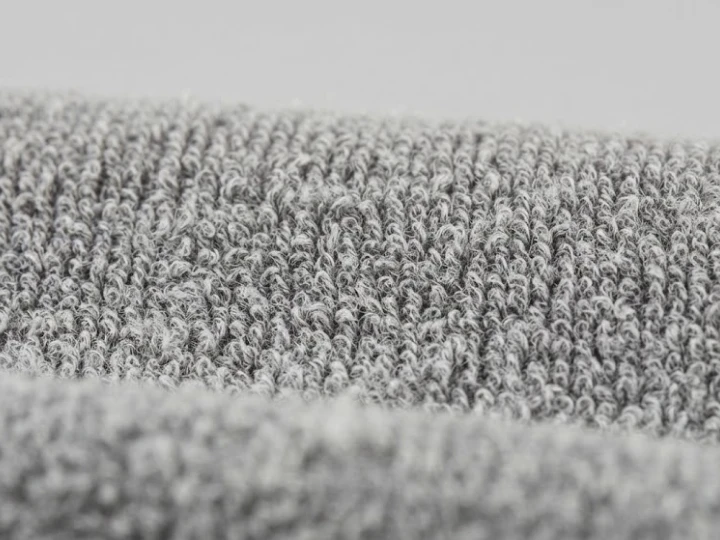
Grade G2 — Classic
Evenly distributed frosted mottle, clearly visible from a normal viewing distance. The most requested grade.
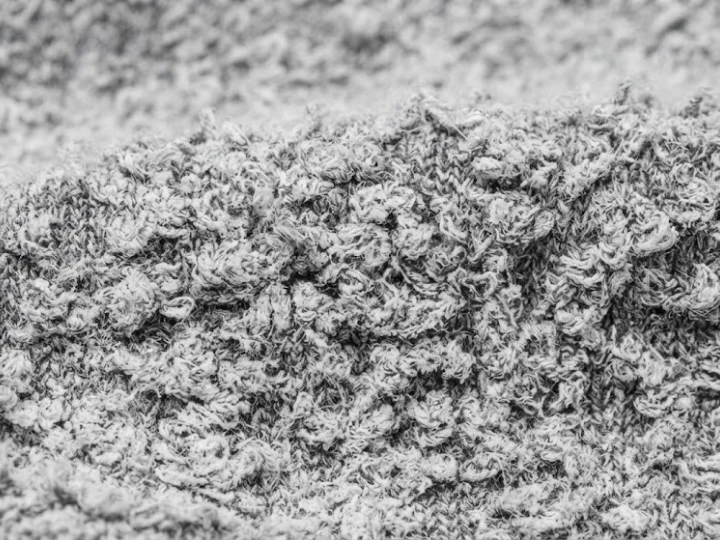
Grade G3 — Deep
Heavier frosting with more visible surface texture change. Still reads quieter than acid wash at any grade.
Grade is confirmed against a physical swatch before sampling starts, not a photo on a screen — the frosted effect is subtle enough that screen color rendering can make G1 and G2 look nearly identical in a product photo when they read clearly different in person.
Which grade fits which use case
Basic vs. statement textureG1 works well when the goal is a premium basic that happens to have texture rather than an obvious wash treatment — it reads as quality fabric more than a visible finish, which makes it an easy pair with a chest logo or embroidery that shouldn't compete with the garment. G2 is the grade most buyers actually mean when they say "snow wash hoodie" without further specification — clearly visible, evenly toned, the default choice for a standalone wash-program piece. G3 pushes further into visible texture change and works best as a slightly more directional piece within a collection, though it still reads considerably quieter than any acid wash grade, including G1.
Compared to acid wash, the gap between grades is narrower here — even G3 snow wash doesn't approach the drama of acid wash G2, let alone G3. That's a feature of the technique, not a limitation: snow wash is built around evenness and restraint, and a buyer looking for high contrast is better served picking up the acid wash program instead of pushing snow wash to its heaviest setting and expecting an acid-wash result.
Fabric weight & base color
What the frost sits on top of350gsm terry is the standard base — light enough that the frosted mottle distributes evenly across the surface, with enough structure to hold shape through the wash process and repeated home laundering afterward. It's a finer knit than the 400gsm fleece used as the acid wash standard, which is part of why the two washes read so differently even before color and grade come into it.
Base color behaves differently for snow wash than it does for acid wash. Mid-tone and lighter colors tend to show the frosted effect most clearly, since the technique works by lifting color in a fine, even pattern rather than the more dramatic contrast acid wash produces on dark bases. Heather grey is the most requested colorway, followed by faded indigo — a nod to the crewneck sample already running in that colorway — and stone and washed olive as the next most common choices. Very dark bases like washed black can still go through the snow wash process, but the frosting reads more subtly against them, closer to a fine heather texture than a clearly visible mottle.
Pastel and very light bases are one place snow wash genuinely has an advantage over acid wash — the frosted effect suits lighter palettes better than acid wash's higher-contrast marbling does, which is part of why brands building a lighter seasonal colorway tend to land on this program by default rather than pushing acid wash onto a base color it doesn't suit.
Construction & customization
What's on the tech packPullover and full-zip are both standard, with kangaroo pocket or no pocket, ribbed or raw hem, and a choice of drawcord hardware — flat or round cord, metal-tipped or plain. None of these change the MOQ. Neck labels, care labels and hang tags are specified separately and attached after the garment is washed and dried, so they don't interact with the wash process itself.
Screen print, puff print and embroidery can all be added on top of any grade, sequenced after the wash and dry stage the same way it works across every wash program — placement is confirmed on the finished, stabilized fabric rather than fabric that's still going to shift in the wash drum.
Getting the same grade across 500 pieces
Not just the approved sampleSnow wash's evenness is exactly what makes bulk consistency harder to hold than it looks. Because the finish depends on uniform distribution rather than random high-contrast marbling, a drifting wash recipe shows up faster and more visibly here than it would on acid wash — an uneven G2 batch reads as a quality problem in a way an uneven acid wash batch might just read as "part of the character." Every run is checked against the approved swatch under consistent lighting through the wash stage, not only at final QC, and colorfastness is checked alongside standard stitching and measurement review at the same AQL 2.5/4.0 pre-shipment inspection run on every order.
MOQ & what moves the price
50 pieces per style, per colorway, is the baseline, and that applies per grade too — G1, G2 and G3 are effectively different finished fabrics on the same base garment. Running all three grades in one style is a 150-piece minimum across them, not 50 total. Unit price moves mainly with wash grade — G3's longer, more intensive wash cycle costs more than G1's lighter one — and with any added decoration. Base fabric cost is more consistent across grades here than it is for acid wash, since all three grades run on the same 350gsm terry rather than switching fabric weight by intensity, which keeps pricing more predictable across the range.
A quote broken down by grade comes back at the feasibility stage, so it's clear upfront which choice is driving cost before a sample is even produced.
A reorder is where the process gets noticeably faster. Once a grade and colorway combination has an approved sample on file, feasibility and sampling are skipped entirely for that combination — the buyer confirms quantity, pays the deposit, and production starts. That's true across every wash program, but it matters slightly more here, since matching an evenly distributed frost consistently is exactly the kind of thing that benefits from a recipe the factory has already run and proven, rather than starting from a fresh wash test each time.
Frequently asked questions
What wash grades are available for snow wash hoodies?
What fabric weight is used for snow wash hoodies?
How is snow wash different from acid wash?
What base colors work best for snow wash?
What's the MOQ for snow wash hoodies?
How does the snow wash effect actually get created?
Ready when you are
Have a reference photo? Start with a quote.
Feasibility check and cost estimate within 2 business days. Send a reference image and we'll help match it to the closest grade.
Reply within 24h · GMT+8 · English OK · NDAs signed on request