Hoodie Manufacturing
Custom Hoodie OEM Manufacturer
The tech pack that comes in most often isn't a full spec sheet — it's a reference photo and a note like "something like this but heavier." That's fine. Most of what shapes a hoodie program gets worked out during the feasibility check anyway: fleece weight, wash treatment, construction details, and whether the print or embroidery goes on before or after the wash. What follows is the full range of what we build hoodies out of and how the three wash programs — acid, snow and vintage — actually differ, so a first message can start closer to a real spec than a mood board.
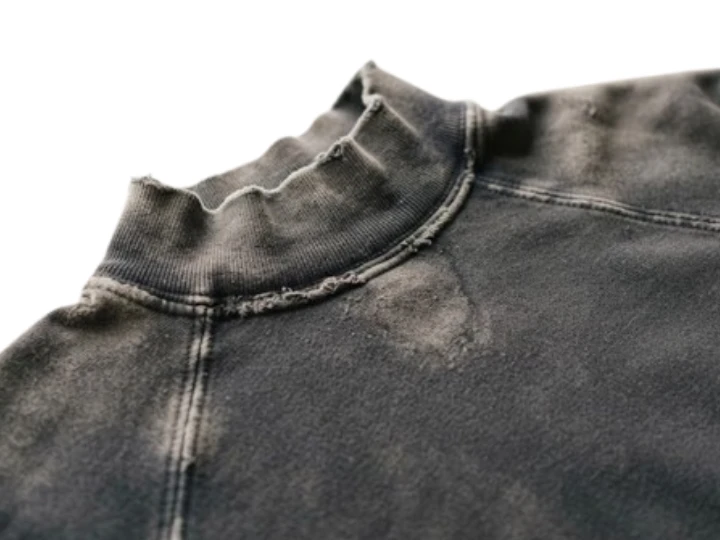
None of the three wash programs are interchangeable once you see them side by side, even though "distressed hoodie" covers all three in casual conversation. Acid wash reads as high-contrast marbling. Snow wash is a softer, frosted, more uniform mottling. Vintage wash is closer to genuine years-of-wear fading, concentrated at seams and high-wear points rather than spread evenly across the garment. Picking the wrong one from a reference photo is the single most common reason a first sample comes back needing a revision.
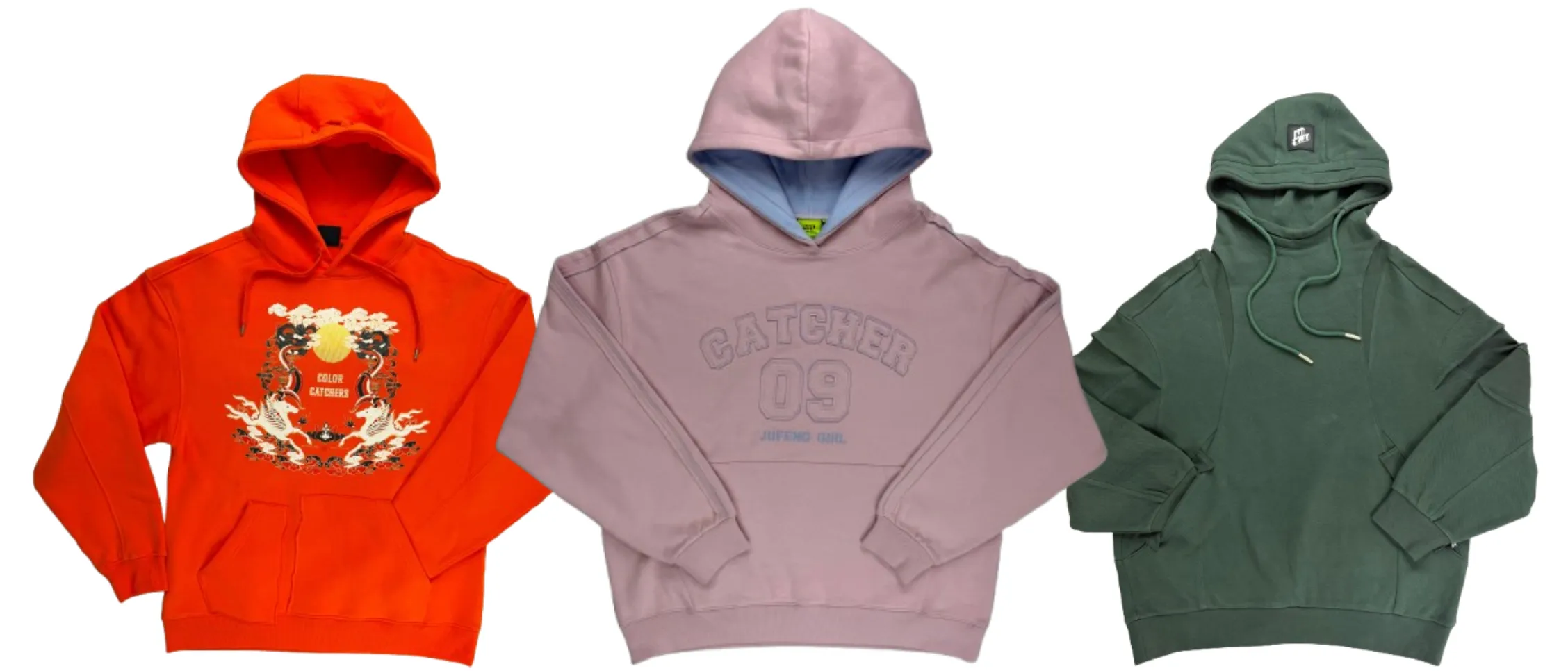
Three wash programs
Pick by finish, not by name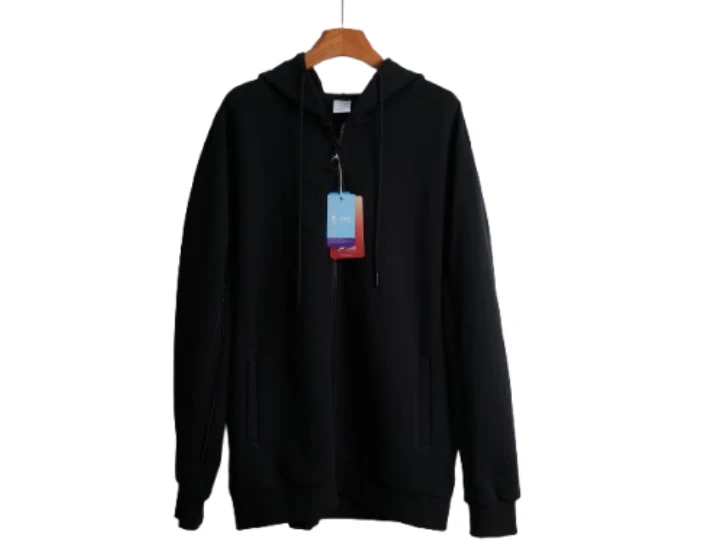
Acid Wash Hoodies
High-contrast marbled wash, graded from subtle to heavy. 400gsm heavyweight fleece is the standard base for this program.
Snow Wash Hoodies
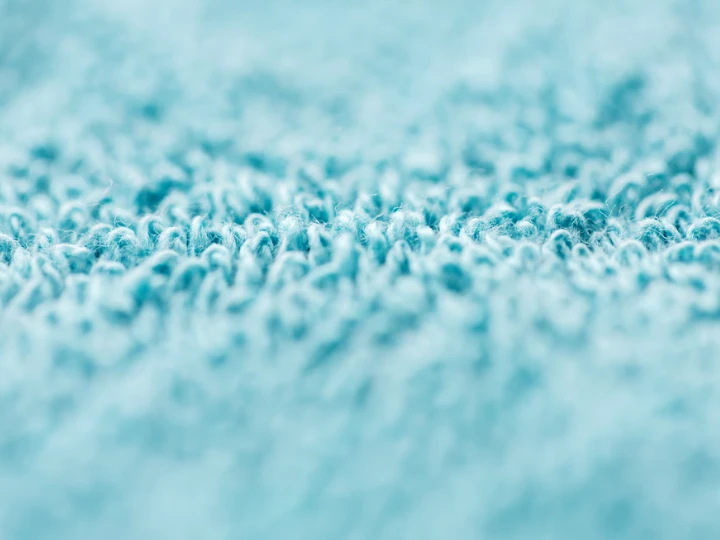
Softer, more uniform frosted mottling. Typically runs on a 350gsm terry base for a lighter hand-feel than acid wash.
Vintage Wash Hoodies
Fading concentrated at seams and high-wear points, closer to genuine years-of-wear than an even overall wash.
Construction & fabric options
What's on the tech packWash treatment is one variable; construction is a separate set of decisions that applies across all three programs. Pullover and full-zip are both standard, along with kangaroo pocket or no pocket, ribbed or raw hem, and drawcord hardware — flat cord, round cord, or metal-tipped. None of these change the MOQ or add meaningfully to lead time; they're confirmed on the tech pack alongside the wash selection rather than treated as upgrades.
Fabric weight is where the three programs genuinely diverge. 400gsm heavyweight fleece is the standard base for acid wash — it holds the marbling contrast better than a lighter fabric and has enough structure to survive the more aggressive wash process without excessive pilling. Snow wash typically runs on 350gsm terry, since the frosting effect reads more clearly on a slightly finer knit. Vintage wash is the most flexible of the three and can run anywhere from 280gsm French terry up to 400gsm fleece depending on how heavy a hand-feel the brand wants — a lighter terry gives a more lived-in, worn t-shirt quality to the fading, while heavier fleece keeps more structure through the distressing.
Every fabric and dye lot used across all three programs is tested against OEKO-TEX Standard 100 limits for harmful substances — azo dyes, formaldehyde, heavy metals and the rest of the criteria catalogue that standard covers. This isn't specific to hoodies; it's how every fabric entering the factory gets vetted, but it matters more here because wash and distressing processes involve more chemical treatment than a plain garment does.
Trim and hardware choices are the last piece of the tech pack, and they're easy to overlook until a sample comes back looking slightly off. Drawcords come flat or round, in matching or contrast colorways, with metal tips, plastic tips, or none. Ribbing at the cuff and waistband can run standard 2x2 or a tighter 1x1 for a slimmer silhouette. Woven or printed neck labels, care labels and hang tags are all specified separately from the garment itself — none of it is complicated, but a hoodie with the right wash and the wrong drawcord still reads as an off-brand sample to whoever's approving it.
Adding print or embroidery to a wash program
After the wash, not beforeScreen print, puff print, embroidery and digital print can all be added to any of the three wash programs. The sequencing matters: decoration goes on after the wash and dry stage, once the fabric has already shrunk and taken its final texture, not before. Printing onto pre-wash fabric risks distortion once the garment goes through the wash drum — a chest logo that measured correctly pre-wash can come out visibly off-scale or off-center after a heavy acid wash cycle. Full detail on technique-by-technique capability, including what works well on heavyweight fleece versus lighter terry, is covered on printing & embellishment capabilities.
MOQ & pricing
50 pieces per style, per colorway, across all three wash programs and every construction variant above — the minimum doesn't change based on which wash or which fabric weight is selected. What does change is unit cost, since heavier fleece, more aggressive wash treatments and added decoration all move the price differently. Full pricing structure, how it scales with quantity, and what drives cost up or down is covered on MOQ & pricing, which applies across every product category, not just hoodies.
Keeping wash results consistent across a bulk run
Lot-to-lot matchingThe hardest technical problem in any wash program isn't getting one hoodie to look right — it's getting five hundred of them to look the same. Acid and snow wash both use a degree of randomness by design, which means the wash drum, load size, and timing all have to be controlled tightly or a bulk order comes back with visible lot-to-lot variation. Each production run is checked against the approved sample under consistent lighting before it moves to the next stage, not just at final QC — catching a drifting wash recipe on day two of a run is a lot cheaper than catching it after the whole order is finished.
Colorfastness gets checked separately from wash consistency. A garment that looks right off the line but bleeds dye onto a white t-shirt after one home wash is a returns problem waiting to happen, and it's more likely on heavily treated fabric than on an untreated one. Rub and wash colorfastness are part of standard pre-shipment inspection on every wash program order, not an add-on service — it's checked at the same AQL 2.5/4.0 inspection that covers stitching, measurements and trim.
Choosing between the three, practically
If you're not sure yetBuyers who come in with a specific reference photo usually already know which program they want, even if they don't know the name for it. For everyone else, the practical difference comes down to how the finished garment is meant to read. Acid wash reads loud and high-contrast — it's the finish most associated with early-2000s streetwear revival and tends to work best as a statement piece rather than a basic. Snow wash is quieter and more evenly toned, closer to a premium basic that happens to have texture rather than an obvious wash treatment. Vintage wash sits in between — visible but not loud, aiming for "this has been worn and loved" rather than "this has been chemically treated." None of the three is more difficult to produce than the others; the right one depends entirely on what the finished piece is supposed to communicate on a rack next to the rest of a collection.
When it's genuinely unclear which fits, sending two or three reference photos alongside the tech pack is more useful than trying to describe the effect in words — wash finishes are visual, and "distressed" means something different to every brand that says it.
It's also common for a single collection to run more than one program — acid wash on a statement hoodie, vintage wash on a core piece meant to anchor a season. Each combination gets sampled and priced separately since the wash recipe, timing and QC checkpoints differ, but there's no requirement to commit to one program across an entire order.
Frequently asked questions
What fleece weights do you offer for custom hoodies?
Can we mix wash techniques within one hoodie order?
Do you offer both pullover and full-zip hoodie constructions?
What's the MOQ if we want all three wash programs in one order?
How long does bulk production take once a sample is approved?
Can you add screen print, puff print or embroidery to a wash program hoodie?
Ready when you are
Building a hoodie program? Start with a quote.
Feasibility check and cost estimate within 2 business days. No tech pack yet? A reference photo and a wash preference is enough to start.
Reply within 24h · GMT+8 · English OK · NDAs signed on request