For Buyers
Buyer Information By Region
Andy took his first international order in 2013 – a 200-piece hoodie run for a Los Angeles streetwear brand that provided a reference picture and very little else. Thirteen years and several thousand production runs later, questions from first-time buyers are the same: Who is really in charge of the factory, what is the price of a sample, and what will happen if the item needs to be corrected after the deposit? Below you can find answers to all of these, as well as region-specific info for sourcing in the US, EU, Australia, and Canada.
The majority of the clients we work with are not sourcing companies – it is streetwear labels of various sizes that usually place their orders for the first time. This significantly affects the way of cooperation on our side – there is no English-speaking sales department separating you from the factory floor; any question related to fabric washing or printing will probably be answered right away by the merchandiser who was on the factory floor this morning. This also implies that the buyer is expected to put in more effort himself – read the specification sheet, approve the lab dip, understand what price the production of 50 pieces will have, approximately. It doesn't require manufacturing experience, but knowledge of what to expect may come in handy.

How international buyers work with us
Inquiry → shipped goods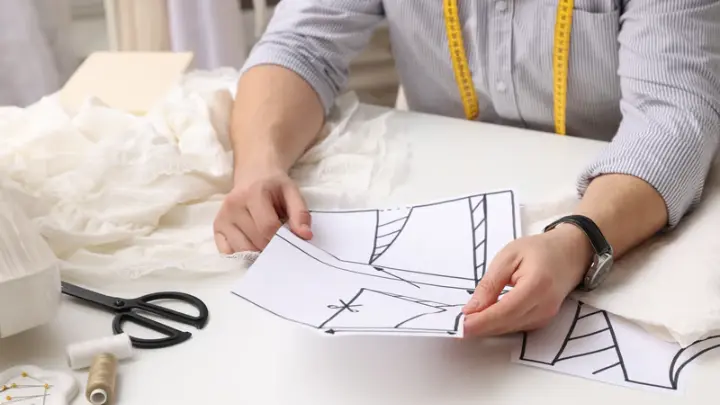
Inquiry & feasibility check
Send a tech pack, reference garment photos, or a rough sketch. A feasibility check and cost estimate come back within 2 business days — no tech pack yet is fine, that's what tech pack support is for.
1–2 business days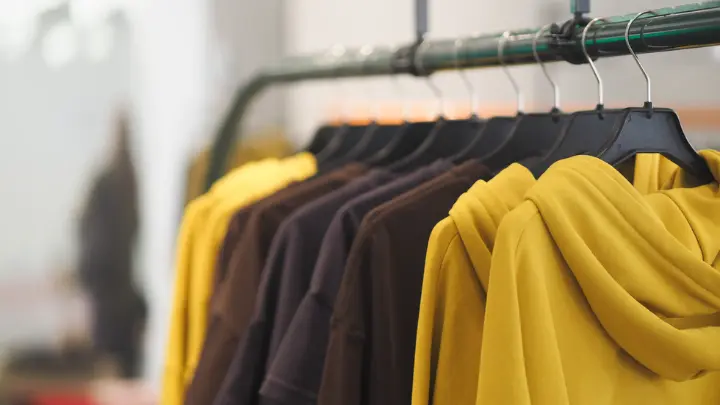
Sampling & approval
A physical sample ships to you before anything goes to bulk production. Wash, print and fit are checked against your spec, and revisions are made until you sign off.
7–15 business days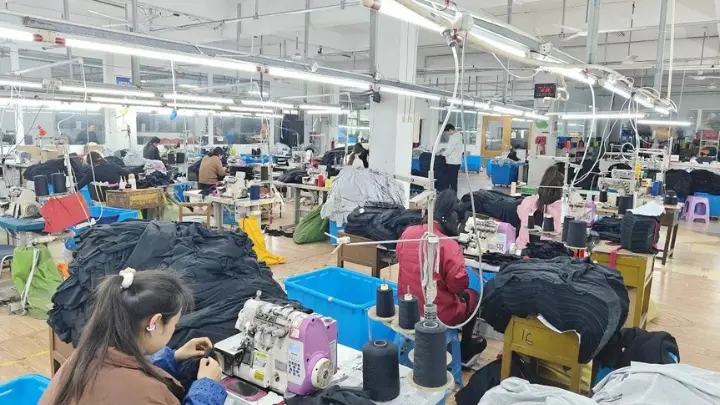
Bulk production, QC & shipping
Production runs to the approved sample, every order gets a 100% pre-shipment inspection at AQL 2.5/4.0, and goods ship FOB, EXW or DDP depending on what your freight setup needs.
25–35 business daysWhat to have ready before you reach out
Speeds up the quoteNone of the above is necessary to send your first request for a quotation; many buyers simply send a reference photo along with a question. But the response from the supplier will come quicker and will be more accurate the more of the below information you already have.
- Tech pack, or at least an attempt to make one. Flat drawings, measurement chart with tolerances, specifications on fabrics and GSM, trims. If any part is missing, it will be included in the course of the feasibility check, but the closer approximation is always better than nothing.
- A reference garment in case when wash or print has to match something particular. In case of a first estimate, the photos can be used, but it will be the actual garment that will be lab-dipped and matched for the purposes of sampling.
- An approximate quantity per style/colorway. The cost varies depending on volume, and 50 pc/per colorway will have a drastically different price compared to 500 and so on. Having an approximate idea of which scale we are talking about makes it unnecessary to receive a quote only to have it redone later.
- Retail or wholesale price target, if applicable. It does not have to be precise, but it will help to determine early on whether fabric or finishing choice will make the style uncompetitive on the market.
- Approximate timeframe. Whether it is a matter of meeting a certain delivery date or not having one.
Import guidance for your region
US · EU · AU · CAThere are specific requirements concerning duties, labeling, and the quickest route for shipping out of South China for each market. Below are pages tailored specifically for the following markets and not some general list.
For US Buyers
CPSC requirements, tariffs & customs entry basics for apparel imports.
for US buyers →
For European Buyers
REACH compliance & VAT considerations when importing garments.
for European buyers →
For Australian Buyers
Labeling rules & current import duty rates for apparel.
for Australian buyers →
For Canadian Buyers
CBSA requirements & practical shipping routes from South China.
for Canadian buyers →
| Region | Main compliance concern | Guide |
|---|---|---|
| United States | CPSC labeling & customs entry (HTS classification) | for US buyers |
| European Union | REACH chemical compliance & import VAT | for European buyers |
| Australia | Care labeling & current duty rates | for Australian buyers |
| Canada | CBSA entry requirements & freight routing | for Canadian buyers |
What every buyer should know before sourcing
MOQ · payment · lead timeMost of the questions that appear in anticipation of the first order are of a pragmatic nature. Listed below are things that apply across all regions – pricing and timing that would depend on specifics of the product are covered on the MOQ & pricing and Shipping & Lead time pages.
The minimum order is 50 pieces per style, per colorway – low enough for a new brand not to be compelled to order more than it wants just to get a first run done. 30% deposit is required for placing an order; the balance of 70% goes against pre-shipment inspection or bill of lading. None of this depends on the region where the order will be imported – only the documents needed at the destination change. This is the reason for listing region-specific import requirements on separate pages, not on a single checklist.
The pre-shipment quality control is not an additional paid service for buyers who need it, but a natural part of the order fulfillment process. All runs are inspected before shipping by the AQL 2.5 criteria for major defects and AQL 4.0 for minor defects in relation to the approved sample, not the spec. Each piece that goes beyond tolerance is inspected and fixed on site, not by buyers on their side when unpacking the shipment thousands of miles away. Inspection reports can be provided on request; for buyers who would like to witness the whole process themselves instead of reading the report, video walk-throughs are available every day – particularly handy for the very first order, as it does not have any history yet.
Communication is also underestimated by buyers in the initial stages of cooperation. GMT+8 time zone makes an immediate response to your message sent from New York in the evening impossible, as you will receive an answer only in the morning. Although the factory does not work via an intermediary agency or trading company, the message is unlikely to be filtered on its way, thus making the response faster; however, the buffer is not there anymore – and missing information is less likely to be added to your message by someone else; it is important to provide all the details in your first message. All artwork and tech packs are stored separately for each client in the corresponding folder; NDA agreements can be signed upon request if you still hesitate to share much of your designs.
When considering a manufacturer on something other than just cost, the due diligence guidance for garment and footwear industries developed by the Organisation for Economic Co-operation and Development (OECD) serves as an independent source to understand what sourcing due diligence really includes.
The reorder process differs from the process of placing the initial order, and it is important to know about it beforehand. In case a style already has an approved sample and the washing/printing formula, the feasibility and sampling processes are completely avoided. The buyer only needs to approve the quantity and colorways, make a payment for the deposit, and start production. This explains why the first order is always a little bit slower than expected by the buyer: some part of the process that takes 1–2 weeks of feasibility time and 7–15 days of sampling time is spent by the factory on creating documentation related to that specific style, which will be used when ordering the same style again.
There is one expectation of the buying process that is worth setting beforehand: the initial order is not necessarily the most economical way of testing a design. Taking into consideration the sample fee, lab dips needed for wash match, and fixed costs of setting up a new style, per-unit pricing in case of a 50-piece first run is higher than in case of repeated production. Buyers should set the expectation about it and think of the first run as proof of concept, rather than a test of the margins.
Frequently asked questions
Which countries does FORGEMFG currently manufacture for?
Who handles customs clearance and import duties — us or the factory?
What payment terms are available to international buyers?
Can we get a sample shipped before committing to a bulk order?
Do you take on new or smaller streetwear brands, or only established labels?
Can we visit the factory, or is a virtual tour available for buyers overseas?
Ready when you are
Sourcing from overseas? Start with a quote.
Feasibility check and cost estimate within 2 business days. No tech pack yet? Send a reference — we'll help you build one.
Reply within 24h · GMT+8 · English OK · NDAs signed on request