Snow Wash: A Softer Frost, Mostly for Colored Fleece
The snow wash is a variation of acid wash using the same fundamental approach, although with a more subdued effect, in the form of a soft, frost-like haze as opposed to marbling. The following is an outline of how this process works, including the shadowing effect of the seams, which gives the snow wash its distinctive look, as well as quality control and handling of chemicals. The sizing and ordering of the snow wash hoodies can be found on another page.
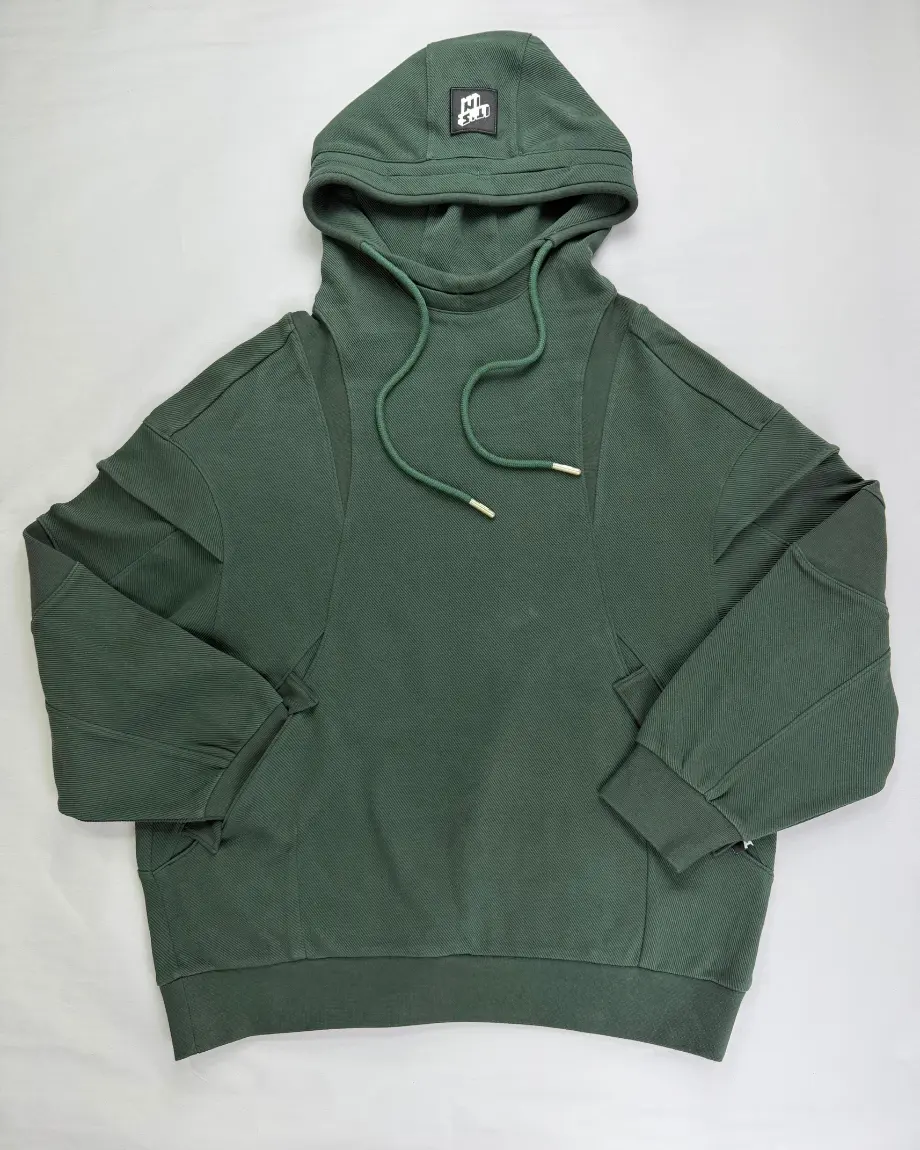
Similar core technique to acid wash, but toned down
For snow wash and acid wash alike, there is an initial step that consists of pumice stones that have been treated with an oxidizer like sodium hypochlorite or potassium permanganate. The pumice stones are tumbled dry with the garments inside, without any water initially in the drum. The difference is in the intensity: for snow wash we use smaller pumice stones, a lower stone-to-garment ratio, and a shorter tumble cycle, which spreads contact evenly across the surface instead of creating the intense patches typical of acid wash.
The subsequent neutralization and softening steps are the same as for acid wash, to remove the stone dust and stop the oxidation process before the garments go to QC.

Why are seam lines and waistbands still darker?
Not an inconsistency — the look itself
Stones roll far more easily across a flat panel than they do into folded, multi-layer areas. Seams, waistbands, ribbed cuffs, and hoods are where the original shade holds, while the flat body of the garment turns frosty. This shadowing effect is natural and depends on how the stones move through each load, so no two pieces come out identical — that variation is part of the process, not a defect, unless your spec calls for a different finish.
What we can control is the tolerance band: every batch is compared against an approved standard and kept within a realistic range, even though the piece-to-piece randomness of the frosting itself can't be eliminated.
If you're weighing snow wash against a different finishing process like laser distressing, the key difference is control. Snow wash relies on random stone contact for its frosted texture; laser distressing burns a pre-programmed pattern onto the fabric for a repeatable, placement-accurate result. Choose snow wash for an all-over frosted look with natural variation, and laser distressing when you need the same wear pattern in the same spot on every piece.
Reasons why this is mostly a fleece treatment for us
Color range matters more than fabric typeSnow wash is not a treatment exclusive to indigo denim, contrary to popular belief. It can strip color from overdyed or sulfur-dyed fabric that's black, navy, or any other dark shade, since the oxidizing chemistry works on the dye layer regardless of what's underneath. In our case it's evolved into a predominantly hoodie- and crewneck-driven treatment because that's where our streetwear clients want the frosted effect — not because the process itself favors fleece over denim.
We do run snow wash on denim when a client asks for it, though it's requested far less often than acid wash. The wash mechanics are the same either way; what changes is the stone size and cycle length we dial in for a lighter fleece versus a heavier denim weave.
Chemical handling and discharge
Same controls as acid washSnow wash uses the same oxidizing chemicals as acid wash — potassium permanganate and sodium hypochlorite — so it gets the same chemical handling controls: dosing measured rather than eyeballed, closed handling to limit employee contact, and PPE required in the wash room. The amount of chemical used is lower and the cycle shorter than for an intensive acid wash, but the handling controls stay the same despite the reduced exposure.
The effluent produced by snow wash is treated using the same on-site treatment procedure as any other wash process on the floor. There is no special treatment or discharge process based on the gentleness of the wash.
Three Grades
Same framework as acid wash, different scale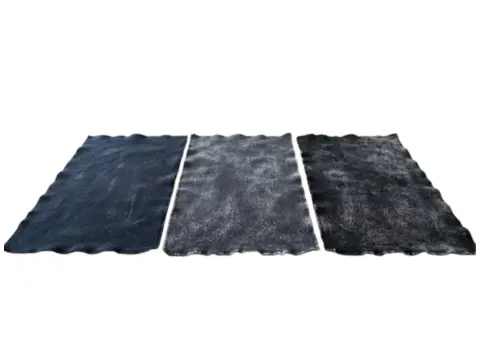
- Light — Soft, thin coating of frosting. ~1:10 stone-to-garment ratio, 8–11 min tumble. [placeholder — confirm actual figures]
- Medium — Smooth, even coating of frosting throughout the body. Our most popular grade. ~1:6 stone-to-garment ratio, 11–15 min tumble. [placeholder — confirm actual figures]
- Heavy — Thick, uniform coating of frosting with seam shadows as the only dark areas remaining. ~1:4 stone-to-garment ratio, 15–20 min tumble. [placeholder — confirm actual figures]
Alternatively, if there is a particular look you want, just send a reference garment, and we can create a test batch based on that.
QC and turnaround times
Consistency within a natural rangeEach batch is compared with our approved standard for frost density and coloration before the normal AQL 2.5/4.0 inspection procedure is used. Some amount of variance between individual pieces is to be expected due to the nature of the process, and we make sure that clients understand that we aim to fall within realistic tolerances around the standard, not match exact results piece by piece.
Regarding timing, tumble time can range from 8 to 20 minutes depending on grade — shorter than acid washing, since snow wash doesn't need the additional tumble time to build color contrast. Overall time, including pre-soaking, tumbling, neutralization, and softening, usually adds 2–3 days to production, or 4–5 days if we need to run a test batch first because of a reference garment.
Potential defects and causes
The failure modes specific to a gentler washThe defect possibilities of snow wash largely overlap with those of acid wash, since the process itself is essentially the same, but some differ as a result of the shorter, gentler cycle.
An unevenly frosted surface — large patches instead of a fine, cloudy texture — usually points to an underloaded or overloaded drum relative to the amount of pumice, which throws off how evenly the stones distribute across the load. We use fixed loading amounts per drum rather than scaling them to the actual batch size.
Weak shadowing contrast — where the seams and waistband don't hold enough of their original color against the frosted surface — happens when the cycle runs longer than the optimal duration for that grade of pumice. That's why cycle times per grade are fixed rather than extended “just in case.”
Crocking and incomplete neutralization carry the same risk profile as acid wash, just with a lower baseline likelihood since less oxidizer is used overall. The neutralization rinse still runs for a fixed duration regardless of the shorter overall cycle.
All of these are common defects for any factory washing garments with pumice and oxidizers. The difference is in how reliably they're managed: through documented, fixed cycle parameters, rather than operator intuition on every new batch.
Order it, or contrast it with distressing
Two places to go from hereIf you are sure about getting this treatment on your hoodie, visit our snow wash hoodies page for size, MOQ, and ordering details. If you're weighing snow wash against a locally worn, distressed look rather than an all-over frost, visit our distressing page.
Frequently asked questions
Snow wash, straight answersWhat's the actual difference between snow wash and acid wash?
Why do the seams and waistband stay darker on a snow washed garment?
Can snow wash be run on colors other than indigo denim?
How many snow wash intensity grades do you offer?
Does snow wash affect fleece GSM or hand-feel?
How long does a snow wash cycle take?
Know the grade you want?
Send the reference. We'll run the test batch.
Ship a physical garment or pick from our three standard grades and we'll come back with a feasibility check and cost estimate within 2 business days.
Reply within 24h · GMT+8 · English OK · NDAs signed on request