Pullover hoodies
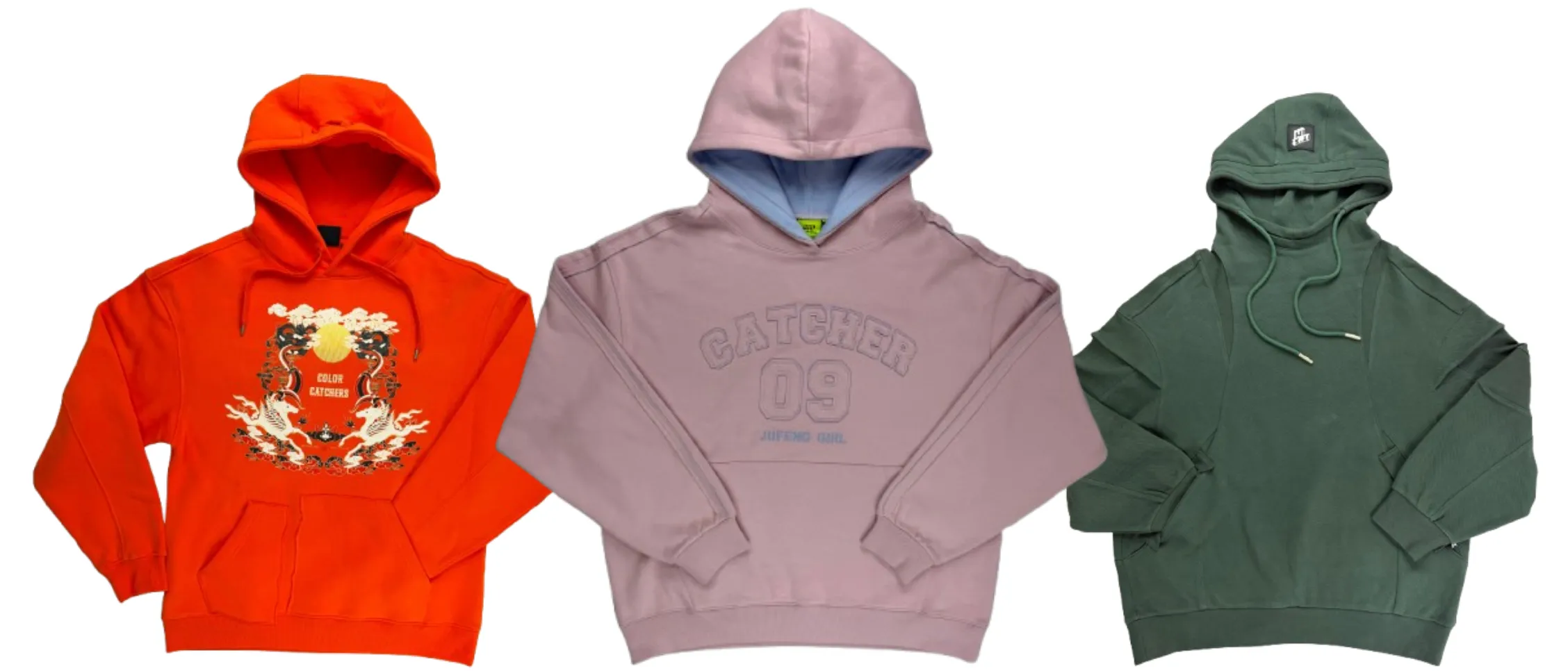
Classic or oversized pullovers with custom hoods, kangaroo pockets, ribs, seams and drawcord details.
Hoodie Manufacturing
FORGEMFG manufactures custom hoodies for streetwear brands, retailers and private-label programs. Our Dongguan factory supports pullover, zip-up, oversized and washed hoodie production in 280–400gsm fabrics. MOQ starts at 50 pieces per style and colorway, with sampling before bulk production.
You can start with a tech pack, a physical sample or clear reference photos. We review the intended fit, fabric weight, construction, branding, wash finish, quantity and delivery target before sampling. This early feasibility check helps prevent avoidable revisions and gives you a more accurate quotation.
Each hoodie program is developed around its intended customer, selling season and price point. We can work from an existing fit reference or develop measurements from your tech pack. Sizes, colors and branding are confirmed during sampling before the bulk run begins.
Classic or oversized pullovers with custom hoods, kangaroo pockets, ribs, seams and drawcord details.
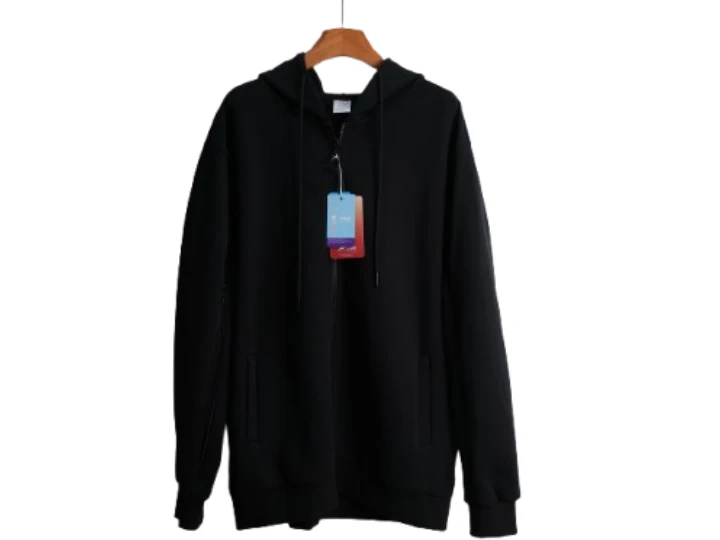
Full-zip and cropped zip-up constructions with selected zipper tape, pullers, pockets and custom hardware.
Structured fleece programs for premium streetwear, including boxy and drop-shoulder silhouettes.
Acid, snow and vintage finishes developed against an approved wash standard for bulk consistency.
Screen print, puff print and suitable digital methods selected for the fabric surface and artwork.
Flat embroidery, dimensional embroidery, applique and patch applications tested during sampling.
High-contrast marbled wash, graded from subtle to heavy. 400gsm heavyweight fleece is the standard base for this program.
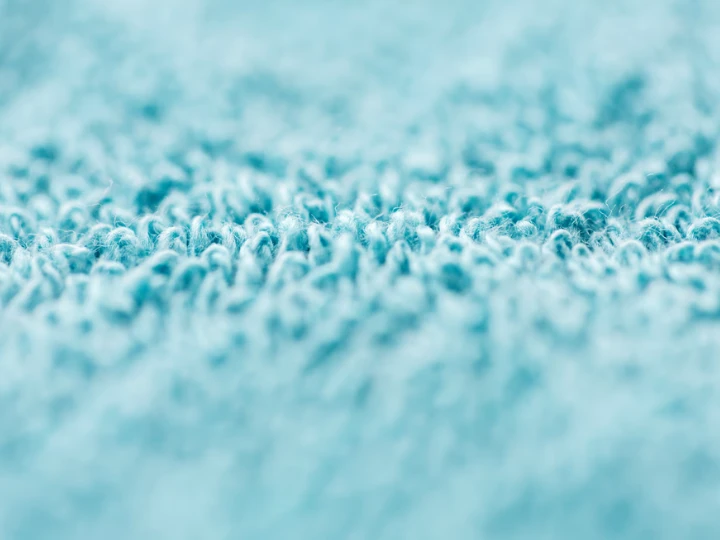
Softer, more uniform frosted mottling. Typically runs on a 350gsm terry base for a lighter hand-feel than acid wash.
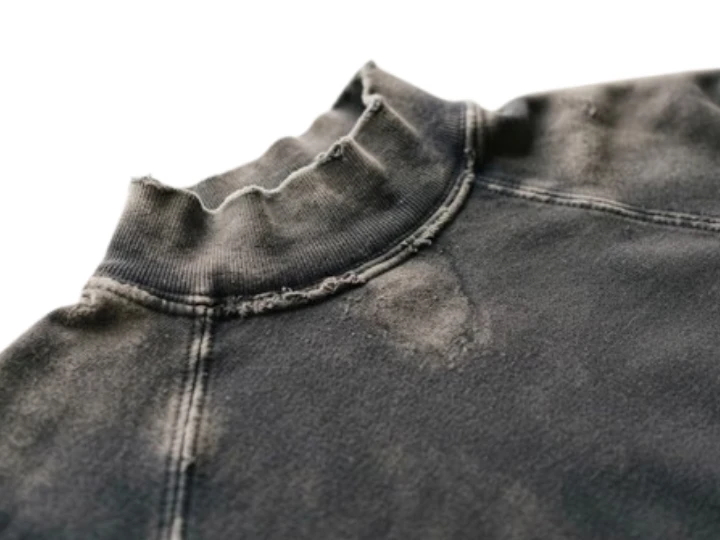
Fading concentrated at seams and high-wear points, closer to genuine years-of-wear than an even overall wash.
The final recipe is confirmed through sampling because fabric composition, base color and wash grade affect the result. Use this comparison to choose the closest starting direction.
| Wash | Visual effect | Typical base | Best suited to |
|---|---|---|---|
| Acid wash | Bold, high-contrast marbling | Heavyweight fleece | Statement streetwear pieces |
| Snow wash | Soft, frosted mottling | Midweight terry or fleece | Textured premium basics |
| Vintage wash | Natural fade at seams and wear points | French terry or fleece | Worn-in and heritage looks |
Wash treatment is one variable; construction is a separate set of decisions that applies across all three programs. Pullover and full-zip are both standard, along with kangaroo pocket or no pocket, ribbed or raw hem, and drawcord hardware — flat cord, round cord, or metal-tipped. None of these change the MOQ or add meaningfully to lead time; they're confirmed on the tech pack alongside the wash selection rather than treated as upgrades.
Fabric weight is where the three programs genuinely diverge. 400gsm heavyweight fleece is the standard base for acid wash — it holds the marbling contrast better than a lighter fabric and has enough structure to survive the more aggressive wash process without excessive pilling. Snow wash typically runs on 350gsm terry, since the frosting effect reads more clearly on a slightly finer knit. Vintage wash is the most flexible of the three and can run anywhere from 280gsm French terry up to 400gsm fleece depending on how heavy a hand-feel the brand wants — a lighter terry gives a more lived-in, worn t-shirt quality to the fading, while heavier fleece keeps more structure through the distressing.
Fabrics selected for a program can be sourced to meet relevant restricted-substance requirements. Buyers can review the official requirements for OEKO-TEX Standard 100, the quality-management framework published by ISO 9001:2015, and the social-compliance approach described by amfori BSCI. The applicable certificate number, holder, scope and validity should be confirmed for the factory or selected material before an order is approved. A general standards reference does not prove that every fabric, color or finished garment is certified.
Trim and hardware choices are the last piece of the tech pack, and they're easy to overlook until a sample comes back looking slightly off. Drawcords come flat or round, in matching or contrast colorways, with metal tips, plastic tips, or none. Ribbing at the cuff and waistband can run standard 2x2 or a tighter 1x1 for a slimmer silhouette. Woven or printed neck labels, care labels and hang tags are all specified separately from the garment itself — none of it is complicated, but a hoodie with the right wash and the wrong drawcord still reads as an off-brand sample to whoever's approving it.
A private-label hoodie is more than a logo application. Your specification can include woven or printed neck labels, care and size labels, hangtags, barcode stickers, branded poly bags and carton markings. Zippers, drawcords, aglets, eyelets and rib colors are approved with the sample so the finished garment is consistent with the rest of your collection.
Screen print, puff print, embroidery and digital print can all be added to any of the three wash programs. The sequencing matters: decoration goes on after the wash and dry stage, once the fabric has already shrunk and taken its final texture, not before. Printing onto pre-wash fabric risks distortion once the garment goes through the wash drum — a chest logo that measured correctly pre-wash can come out visibly off-scale or off-center after a heavy acid wash cycle. Full detail on technique-by-technique capability, including what works well on heavyweight fleece versus lighter terry, is covered on printing & embellishment capabilities.
50 pieces per style, per colorway, across all three wash programs and every construction variant above — the minimum doesn't change based on which wash or which fabric weight is selected. What does change is unit cost, since heavier fleece, more aggressive wash treatments and added decoration all move the price differently. Full pricing structure, how it scales with quantity, and what drives cost up or down is covered on MOQ & pricing, which applies across every product category, not just hoodies.
We review your reference, tech pack, quantity, fit, fabric, branding, target market and delivery date.
Fabric weight, composition, trims, wash route, artwork method and packaging are checked before quotation.
A sample is produced to review fit, measurements, hand-feel, color, wash grade and artwork placement.
Approved specifications become the production standard for cutting, sewing, washing and decoration.
Measurements, stitching, trims, appearance, wash consistency and packing are checked against the approved standard.
Approved goods are packed to the agreed specification and prepared for the selected shipping route.
The hardest technical problem in any wash program isn't getting one hoodie to look right — it's getting five hundred of them to look the same. Acid and snow wash both use a degree of randomness by design, which means the wash drum, load size, and timing all have to be controlled tightly or a bulk order comes back with visible lot-to-lot variation. Production batches are checked against the approved sample under consistent lighting before it moves to the next stage, not just at final QC — catching a drifting wash recipe on day two of a run is a lot cheaper than catching it after the whole order is finished.
Colorfastness gets checked separately from wash consistency. A garment that looks right off the line but bleeds dye onto a white t-shirt after one home wash is a returns problem waiting to happen, and it's more likely on heavily treated fabric than on an untreated one. The agreed inspection plan should state whether rub and wash colorfastness testing is required, along with measurement, stitching, appearance and trim checks. Where AQL inspection is requested, the acceptance levels and sampling plan are confirmed before production.
Buyers who come in with a specific reference photo usually already know which program they want, even if they don't know the name for it. For everyone else, the practical difference comes down to how the finished garment is meant to read. Acid wash reads loud and high-contrast — it's the finish most associated with early-2000s streetwear revival and tends to work best as a statement piece rather than a basic. Snow wash is quieter and more evenly toned, closer to a premium basic that happens to have texture rather than an obvious wash treatment. Vintage wash sits in between — visible but not loud, aiming for "this has been worn and loved" rather than "this has been chemically treated." Each finish has different recipe and consistency controls. The right choice depends on the intended look, base fabric, color and target price.
When it's genuinely unclear which fits, sending two or three reference photos alongside the tech pack is more useful than trying to describe the effect in words — wash finishes are visual, and "distressed" means something different to every brand that says it.
It's also common for a single collection to run more than one program — acid wash on a statement hoodie, vintage wash on a core piece meant to anchor a season. Each combination gets sampled and priced separately since the wash recipe, timing and QC checkpoints differ, but there's no requirement to commit to one program across an entire order.
More detail produces a more useful first quotation. If a specification is not final, mark it as open so the production team can suggest options.
If your specification is incomplete, include the information you have and mark open decisions clearly before requesting a quote.
Ready when you are
Feasibility check and cost estimate within 2 business days. No tech pack yet? A reference photo and a wash preference is enough to start.
Reply within 24h · GMT+8 · English-speaking project support · NDAs signed on request